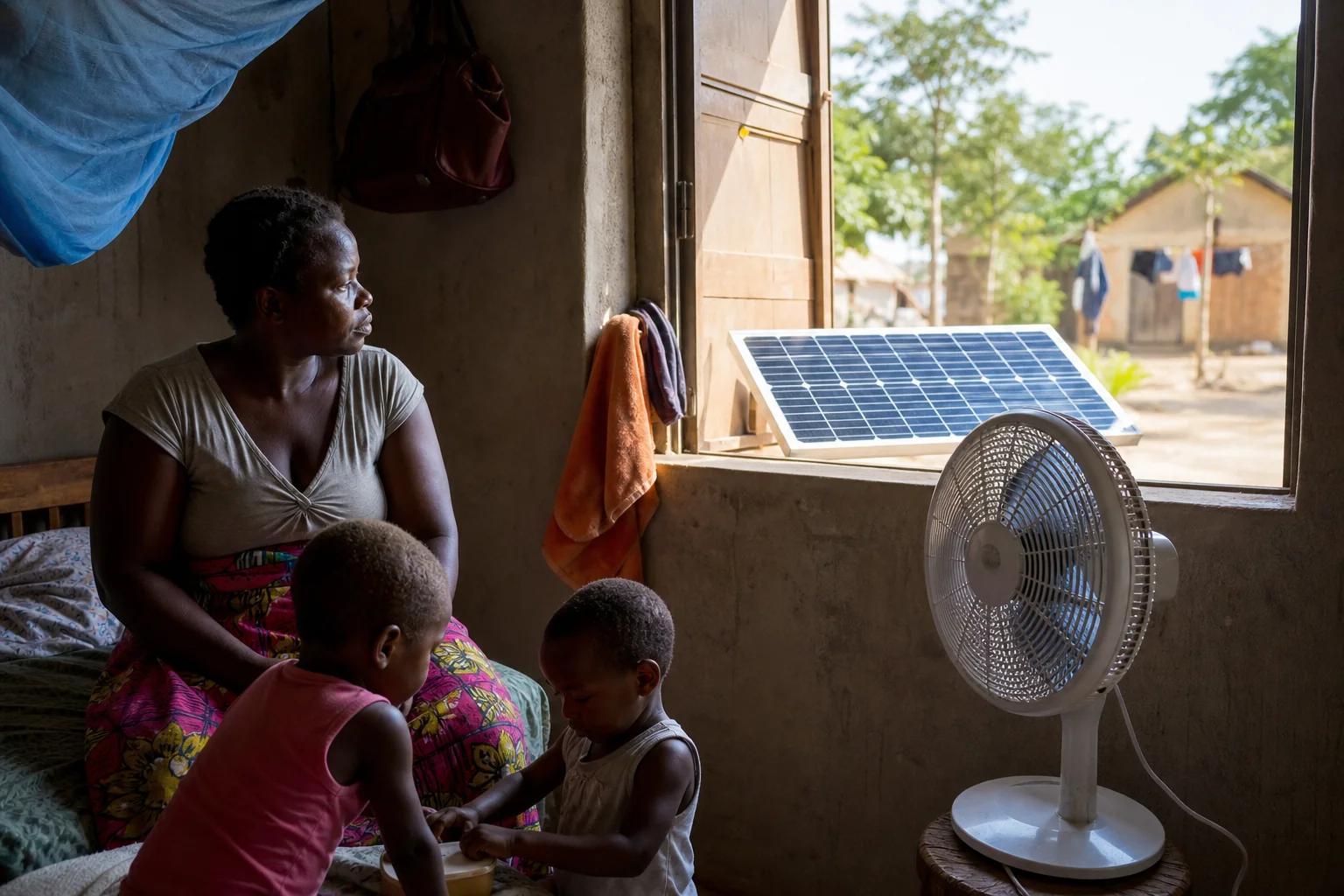
A solar fan can sometimes charge through a window, but it usually charges slowly and runs weaker than it would outdoors in direct sun. For reliable cooling, place the solar panel outside, use a battery-backed fan, or treat window charging as a low-output backup.
Is your sunny windowsill promising free power while the room still feels stuffy? In real cabin and RV-style setups, even a small 20-watt ventilation fan can be useful when the panel gets clear sun, but glass, shade, and poor angle can quickly turn useful airflow into a weak trickle. Here’s how to decide whether window charging will work for your solar fan, and what to change when it doesn’t.
The Short Answer: Yes, But Not Well
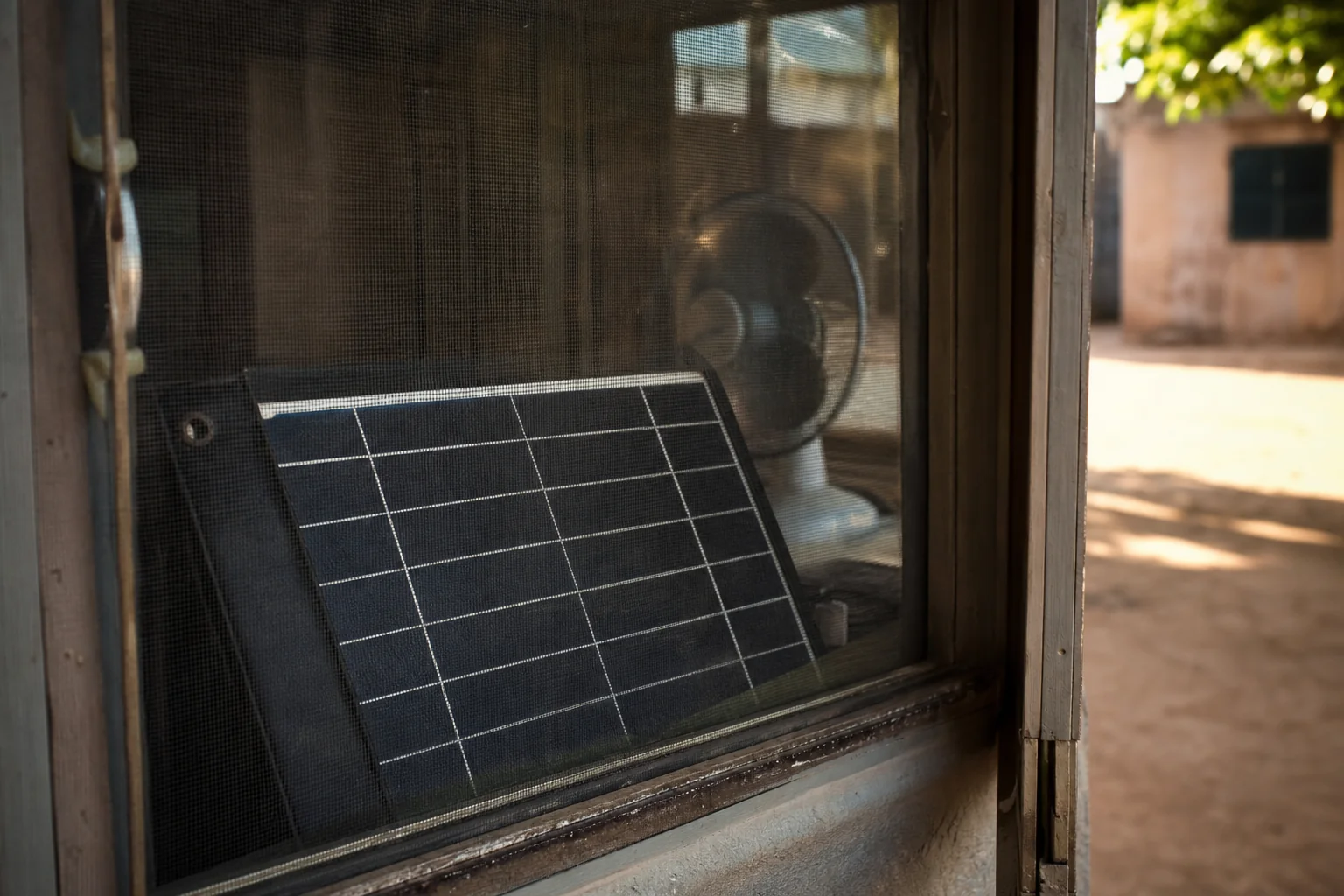
A solar fan charges or runs from electricity made by a photovoltaic panel, and that panel needs strong light, not just brightness that looks good to the eye. A window may look sunny, but standard household glass blocks some solar energy, changes the light angle, and adds reflections that reduce panel output. That means a fan that spins strongly with the panel outdoors may slow down, pulse, or fail to start when the same panel sits behind glass.
The practical rule is simple: if the fan is only for occasional desk cooling, greenhouse air movement, or a small pet-safe breeze near a window, charging through glass may be acceptable. If the fan is for attic ventilation, cabin moisture control, RV airflow, or outage cooling, put the panel outside where it receives direct sun.
Why Window Glass Reduces Solar Fan Charging
Solar panels convert sunlight into DC electricity, and complete off-grid systems typically add a charge controller, battery, and sometimes an inverter depending on the load. A basic photovoltaic setup includes panels, charge control, batteries, wiring protection, and monitoring when reliability matters, as shown in one long-running small off-grid system that began with a 130-watt panel and later expanded to support meaningful household loads through careful design of an off-grid photovoltaic system.
A window changes the panel’s operating conditions. The panel receives less usable sunlight, and the reduced voltage or current may not be enough to start the fan motor cleanly. This is especially noticeable with direct-drive solar fans that have no battery. In a small cabin discussion, users testing dedicated solar-powered fans noted that low voltage can make some 12-volt fans hum or twitch instead of spinning properly, which is one reason purpose-built solar fan kits may include electronics that handle weak-light startup better.
The effect gets worse when the window has tint, low-E coating, insect screens, dirt, overhang shade, or a poor sun angle. A south-facing window in the northern half of the United States may give passable midday output, while an east-facing window might only help in the morning and a north-facing window may be mostly unsuitable.
Charging Through a Window vs. Running Through a Window
A solar fan can be designed in two different ways, and the distinction matters. A direct solar fan runs when the panel is producing enough power. A battery solar fan stores energy first, then runs from the battery when sunlight dips. Solar ventilation products commonly include a panel, fan motor, optional battery, and controller to regulate power flow, with battery-equipped models offering better performance during clouds, evening use, or outages for solar ventilation products.
If your fan has a built-in battery, a sunny window may add some charge over several hours, especially for a small portable fan. But charging through glass should be treated like slow charging, not full solar input. If your fan has no battery and the panel is behind a window, expect speed to rise and fall with passing clouds, window angle, and time of day.
Here is the practical comparison.
| Setup | Expected result | Best use |
|---|---|---|
| Panel behind window, no battery | Weak or inconsistent fan speed | Small desk fan in bright midday sun |
| Panel behind window, with battery | Slow charging, steadier runtime later | Occasional portable cooling |
| Panel outside, fan inside | Stronger charging and airflow | Cabin, RV, greenhouse, shed, or apartment window |
| Panel outside, battery-backed fan | Most reliable small solar cooling | Outages, pets, humid rooms, off-grid ventilation |
A Simple Real-World Check Before You Buy More Gear
Use the fan itself as the test instrument. Put the panel outside in direct sun and note fan speed or charging indicator behavior. Then place the same panel behind the window at the same time of day. If the fan speed drops sharply, the charging light flickers, or the fan fails to restart after you stop it, the window is costing too much output.
For a rough energy example, suppose a small solar fan uses 10 watts and you want it to run for six hours. That is 60 watt-hours of energy before losses. If a 20-watt panel receives strong outdoor sun for four good hours, it has a reasonable chance of covering that need with a small buffer. Behind glass, the same panel may no longer produce enough usable power for the same runtime, especially if the fan is charging a battery at the same time.
This is why off-grid sizing advice almost always starts with the load, not the panel sticker. Design methodology for off-grid PV systems emphasizes matching generation, storage, charge control, and load demand rather than assuming a panel’s rated wattage will appear in real conditions for an off-grid PV solar powered system.
Best Setups for Common Home and Off-Grid Scenarios
Apartment or Home Office
If you cannot mount anything outdoors, choose a small battery-backed fan with a separate panel that can sit flat against the brightest window. Keep expectations modest. It may top up during the day and help you through a warm afternoon, but it will not perform like a wall-powered fan.
For renters, a removable suction-cup or clamp-mounted outdoor panel can be a major improvement if building rules allow it. Even moving the panel outside the glass while keeping the fan indoors can turn an unreliable setup into a usable one.
Cabin or Shed Ventilation
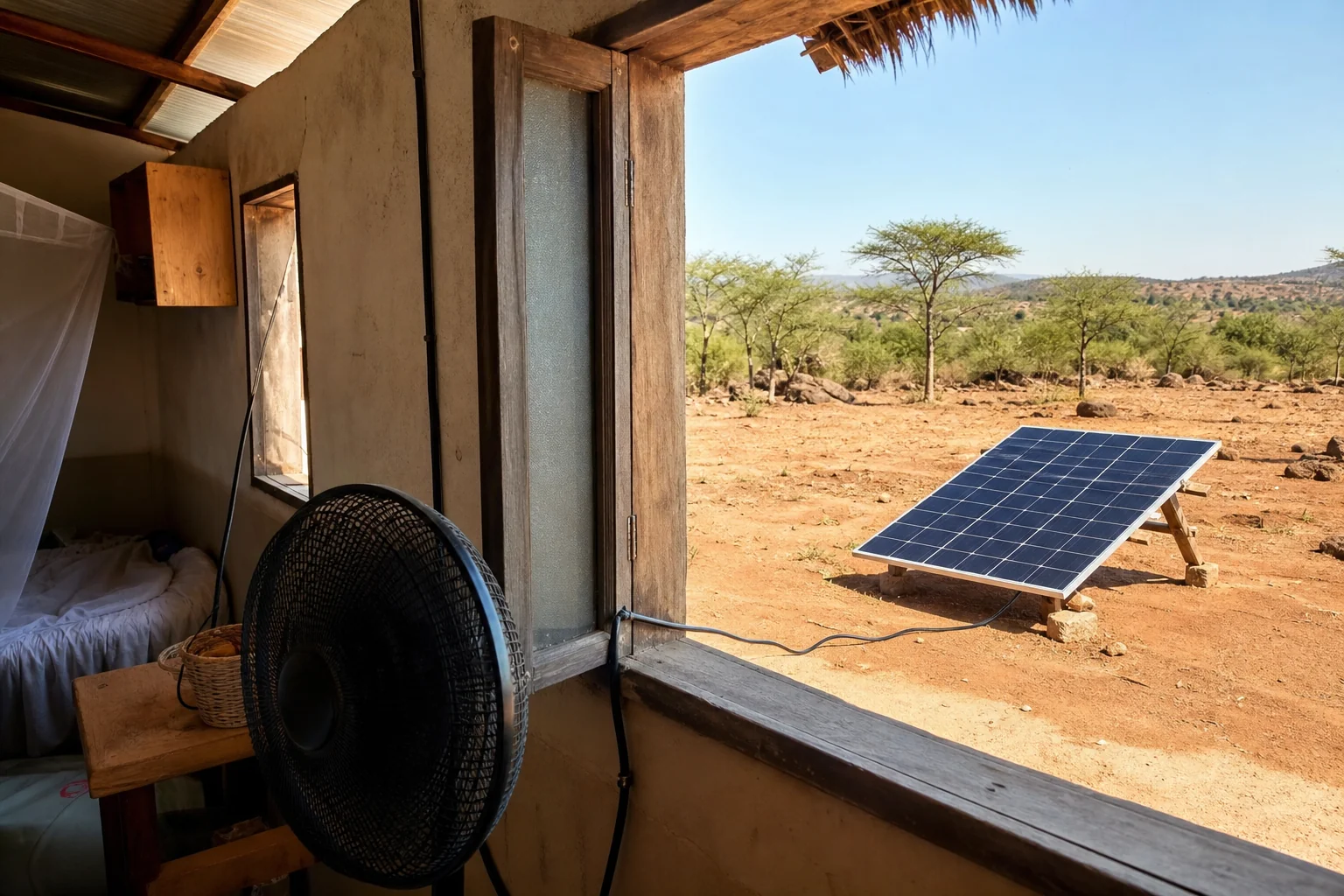
For a musty cabin, charging through a window is usually the wrong priority. The better system is a small exterior panel wired to a solar vent fan, plus a low intake opening and a high exhaust path. The small-cabin field advice lines up with passive-solar principles: warm air needs a path to move, and fans work best when they support airflow rather than fight a sealed room.
The U.S. Department of Energy describes passive solar homes as using conduction, convection, and radiation to move and store heat, and notes that small fans or blowers can help distribute collected heat in some passive solar homes. The same practical idea applies to summer ventilation: give air a low place to enter and a high place to leave.
Greenhouse, RV, or Tiny Home
A window-charged panel is rarely enough for dependable ventilation in a greenhouse or RV during peak heat. In these spaces, heat buildup happens fastest when the sun is strongest, which is good for solar production but unforgiving if your panel is shaded behind glass or parked at the wrong angle.
For mobile setups, portable solar is valuable because it can be aimed at the sun and moved as shade changes. Portable solar products are commonly used to charge or power phones, laptops, lights, and refrigerators, showing how flexible small solar can be when the panel is not trapped in a poor location.
Pros and Cons of Charging a Solar Fan Through a Window
| Pros | Cons |
|---|---|
| No roof work or exterior wiring | Much lower charging performance |
| Works for renters in some situations | Tint, screens, and low-E glass can reduce output |
| Keeps equipment indoors and dry | Direct-drive fans may stall or pulse |
| Useful for small fans and backup charging | Poor choice for attic, cabin, or greenhouse ventilation |
How to Get Better Performance Without Overbuilding
First, separate the panel from the fan if your model allows it. Put the panel outdoors in direct sun and run the cable through a cracked window, vent, or weather-safe pass-through. Keep the cable short enough to avoid unnecessary voltage drop, but do not pinch it in a way that damages insulation.
Second, choose a fan with a battery and controller if you need steady airflow. A controller protects the battery and helps regulate power, which matters when sunlight is variable. MPPT charge controllers are often favored in larger off-grid systems because they can harvest more energy in low-light or changing conditions.
Third, reduce the cooling load before chasing bigger panels. Use shade cloth, curtains, reflective window coverings, roof vents, cross-breezes, and LED lighting. Solar ventilation can reduce heat buildup and ease air-conditioning demand, but it works best as part of a low-energy cooling plan rather than as a standalone fix for solar ventilation systems.
When Window Charging Is Good Enough
Window charging is good enough when failure is only inconvenient. A portable fan for a desk, a small breeze for seed starts, or a battery top-up near a bright window can make sense. It is also useful for testing whether solar cooling fits your routine before you drill holes or buy a larger kit.
It is not good enough when airflow protects property, health, or stored food. For attic moisture, greenhouse overheating, pet comfort, medical backup, or off-grid cabin ventilation, design the system around direct outdoor sun, battery capacity, and actual fan watt-hours.
FAQ
Can a solar fan charge on cloudy days through a window?
It may charge very slowly, but cloudy light plus window losses is a weak combination. A battery indicator might show some input, yet the fan may not gain enough stored energy for useful runtime.
Will a solar fan work through a car windshield?
Sometimes, but performance is usually poor because windshields are angled, laminated, often tinted, and hot. For camping or vehicle ventilation, place the panel outside the vehicle when practical and keep the fan shaded inside.
Can I use a bigger solar panel behind the window?
A bigger panel can help, but it does not fix poor light. If the choice is between a larger indoor panel and a smaller outdoor panel, the outdoor panel often wins in real use.
Bottom Line
A solar fan can charge through a window, but direct outdoor sunlight is the difference between a fan that kind of works and one that actually cools or ventilates. For dependable low-energy cooling, match the fan’s watt-hours to your use, give the panel real sun, and add a battery when airflow needs to continue after clouds roll in.

Daniel Brooks
Daniel Brooks is part of the Farseen editorial team.