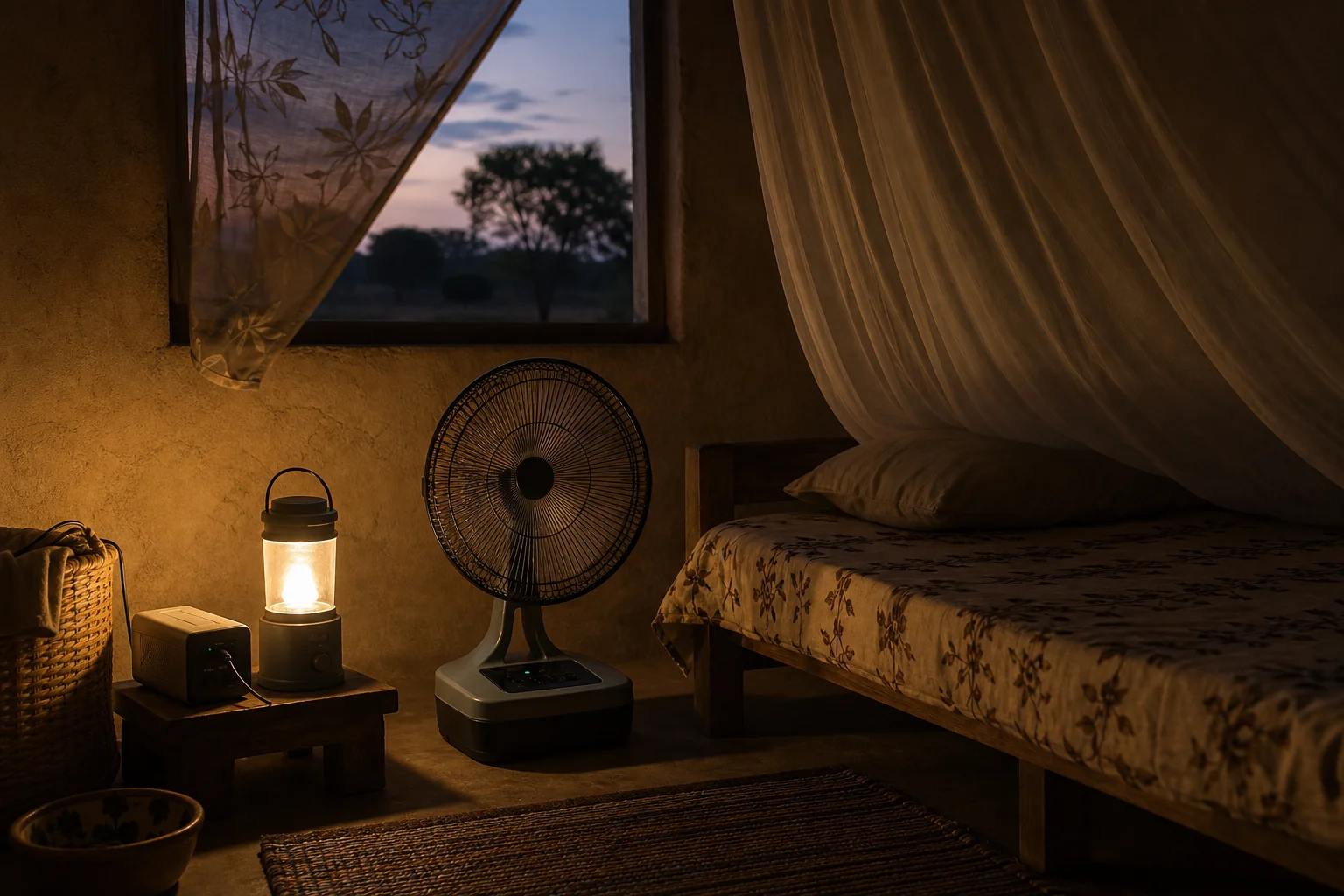
Lower fan speed usually stretches battery life because the motor draws less power, while high speed cools faster but drains stored energy sooner. For off-grid use, the best setting is the lowest speed that still keeps air moving where you feel it.
Is your fan strong at sunset but dead before midnight, even though the battery looked full in the afternoon? In real off-grid setups, changing fan speed is often the easiest way to turn a few hours of backup into all-night comfort without buying a bigger battery. Here is how to choose low, medium, or high speed based on heat, noise, battery chemistry, and solar recharge time.
Why Fan Speed Changes Runtime So Much
A battery-powered or solar-backed fan is simple on the surface: stored energy goes in, airflow comes out. The catch is that higher speed asks the motor to do more work every minute, so the battery empties faster. Solar DC fans use direct current from a solar panel, battery, or controller to spin a motor and move air, and the control unit may adjust speed based on available sunlight and stored battery capacity solar DC fans.
The practical rule is straightforward: battery runtime depends on battery energy, fan power draw, inverter or controller losses, and speed setting. If a fan uses 8 watts on low and 24 watts on high, high speed will not feel three times worse to your body, but it can drain the battery roughly three times faster. That is why a small speed change matters more at night than it does at noon, when the panel is actively helping.
In off-grid use, the setting that wins is rarely the strongest one. A quiet low or medium speed aimed at the body, bed, workbench, or intake vent often beats high speed pointed vaguely across a room. Air placement is an energy strategy.
Low Speed: Best for Overnight Runtime and Quiet Comfort
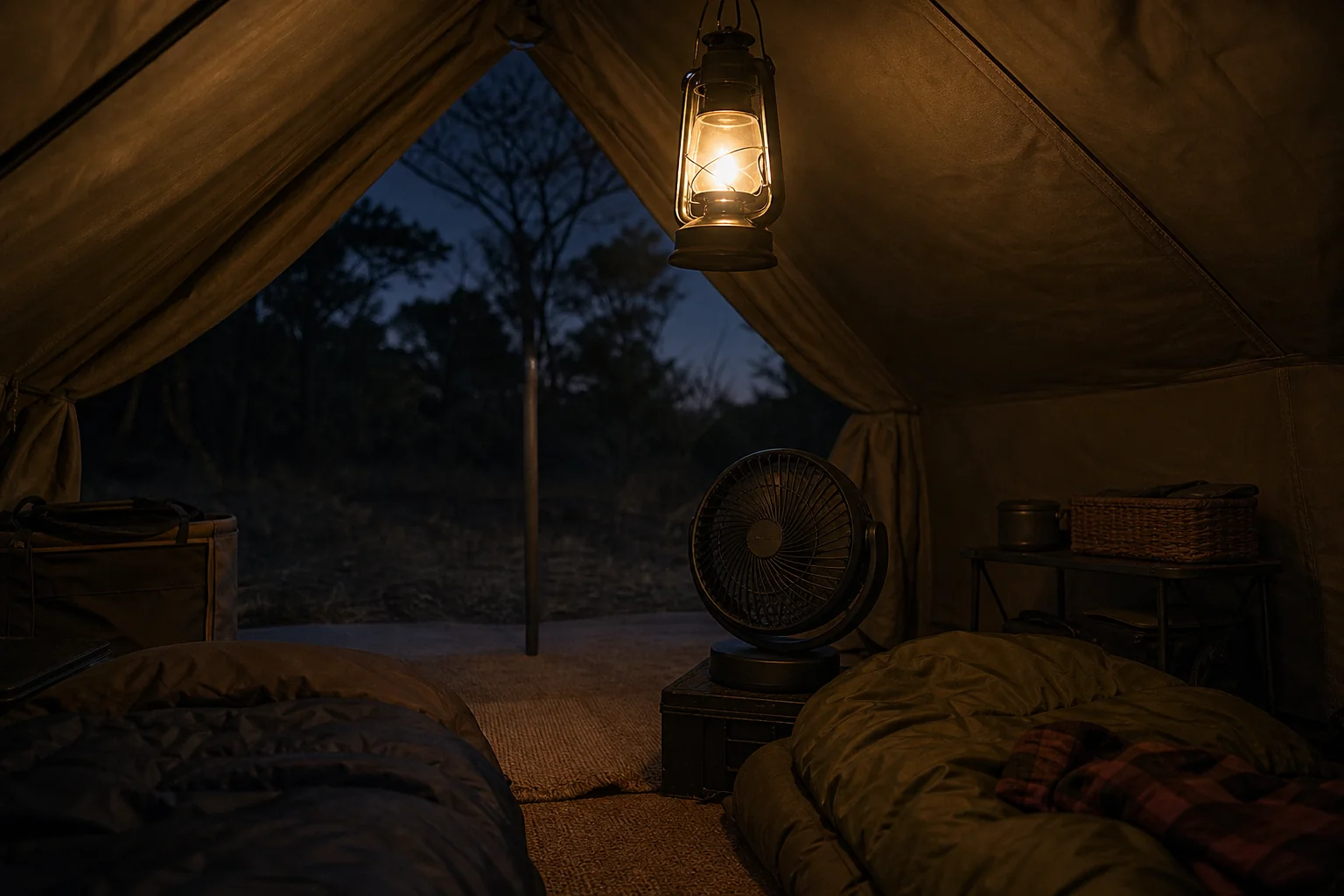
Low speed is the setting to use when the goal is endurance. It works best for sleeping, desk cooling, drying damp air in a small cabin, keeping a greenhouse from going stagnant after sunset, or maintaining light airflow in an RV without dragging the battery too deep.
Battery-backed solar fans are useful because they keep running when sunlight fades; 12V solar batteries store extra panel energy so fans can operate during cloudy periods, evenings, or nighttime 12V solar batteries. At low speed, that stored energy is spent slowly, which reduces the chance that your battery management system shuts the fan off before morning.
Low speed also has a comfort advantage that is easy to overlook: it is usually quieter. For bedrooms, nurseries, small cabins, and campers, noise can matter as much as airflow. If the fan is close to your body, low speed can feel better than a louder high-speed blast across the room.
The downside is limited reach. Low speed will not purge a hot attic, cool a large workshop, or move air through a long duct very well. It is best used for personal cooling or gentle circulation, not as a substitute for a properly sized ventilation fan.
Medium Speed: The Off-Grid Sweet Spot
Medium speed is usually the most balanced setting for daily use. It gives enough airflow to feel useful across a small room, tent, patio table, van, greenhouse bench, or workshop corner while preserving far more runtime than high speed.
Portable solar fans commonly pair 5 to 20 watt panels with 10,000 to 20,000 mAh batteries and multiple speed settings, with advertised runtimes often falling across a broad 10 to 24 hour range depending on battery size and fan demand portable solar fans. That wide range is the point: the same battery can behave like a short backup or a long backup depending on speed.
A useful field example is an evening cabin routine. Run medium speed from 6:00 PM to 9:00 PM while the cabin is still holding heat, then drop to low speed overnight. That gives real cooling when the room is uncomfortable, then shifts into battery preservation once temperatures fall. This approach is often smarter than running high speed until the battery is flat.
Medium speed is also the safest default when you are unsure of the battery state. If your controller display is vague, your battery is aging, or clouds reduced charging that day, medium gives you useful airflow without gambling the whole night’s reserve.
High Speed: Use It Like a Tool
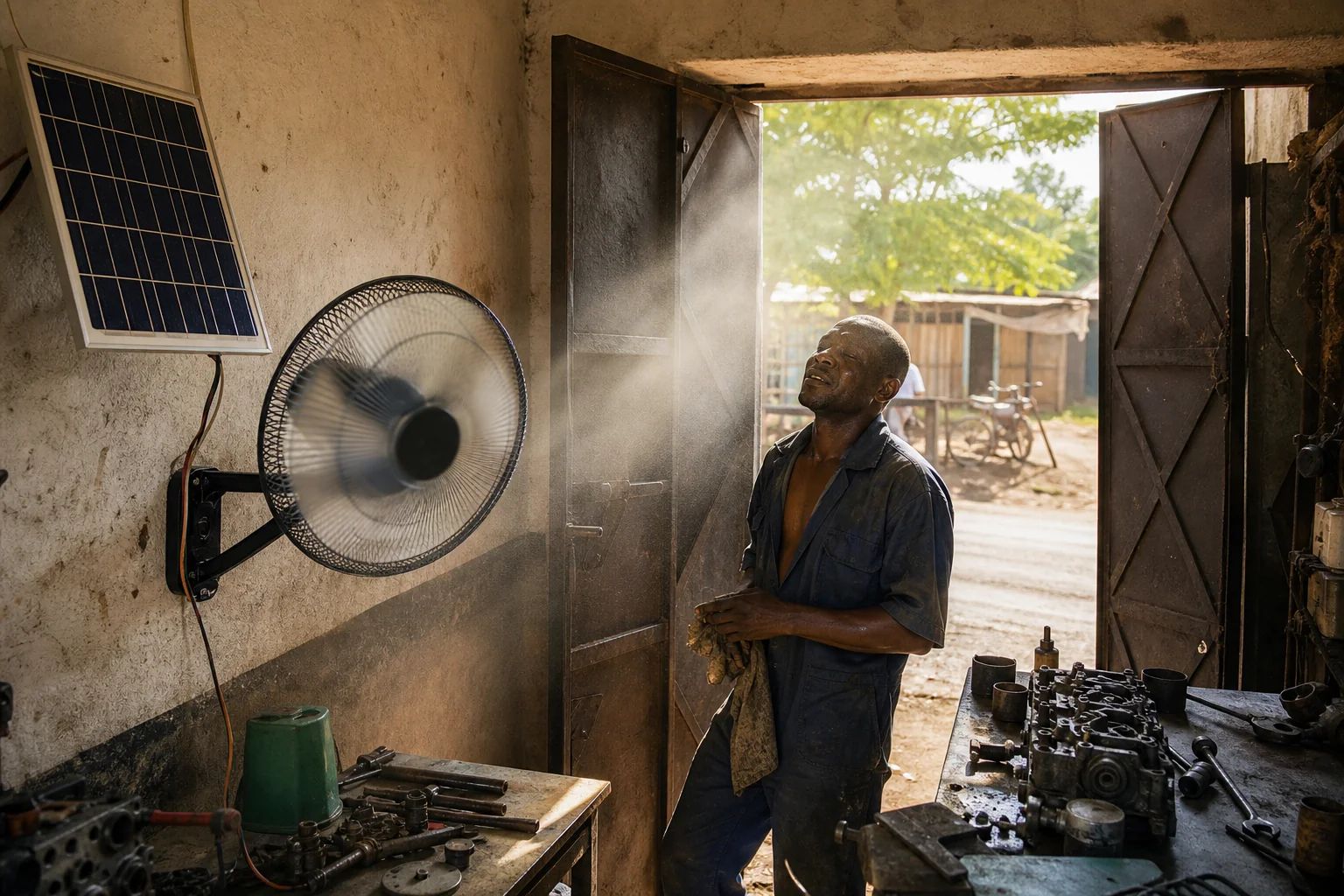
High speed has a place. Use it when you need fast heat relief, stronger ventilation, odor clearing, smoke removal after cooking, quick attic or shed exhaust, or a short blast of airflow while solar input is strong. It is the right setting when comfort or air exchange matters more than runtime.
Solar attic and ventilation fans show why high airflow can be valuable. Mobile-home solar attic fans may move around 800 to 1,600 CFM and can reduce cooling load when properly matched to the space. That kind of job is not about gentle personal comfort; it is about moving hot air out before it radiates into living space.
The tradeoff is battery stress. Running high speed late at night can push a small battery into a deep discharge, especially if the next day is cloudy. Lead-acid batteries are less forgiving because they generally tolerate less usable depth of discharge than lithium options. Lithium iron phosphate batteries are often better suited to repeated solar fan cycling because they offer higher energy density, longer cycle life, and better stability than many older chemistries.
High speed is best treated as a timed setting. Use it for 10 to 30 minutes to flush heat, then return to medium or low. If your fan has a timer, use it.
Runtime Comparison by Speed
The exact numbers depend on the fan, battery voltage, motor type, blade size, and controller efficiency. Still, the pattern is consistent enough to guide decisions.
| Speed setting | Best use | Battery impact | Practical off-grid advice |
|---|---|---|---|
| Low | Sleeping, desk cooling, gentle circulation | Slowest drain | Use overnight or when solar recharge is uncertain |
| Medium | Evening comfort, small rooms, tents, RVs | Moderate drain | Best default for comfort without wasting stored energy |
| High | Fast cooling, exhaust, hot sheds, attic bursts | Fastest drain | Use briefly, especially when the sun is still charging |
A simple way to think about it is to budget the battery like water in a tank. Low speed is a slow drip. Medium is a steady stream. High is opening the valve wide. The tank size matters, but the valve position still decides how long it lasts.
Battery Size, mAh, and Why Labels Can Mislead
Many portable fans advertise battery capacity in mAh, such as 20,000 mAh. That number is useful, but it is incomplete unless you know the battery voltage and the fan’s watt draw at each speed. A 20,000 mAh portable rechargeable fan may include three speed settings, USB-C charging, a light, and solar charging support 20,000 mAh portable rechargeable fan, but the listing still needs real runtime-by-speed data before you can trust it for outage planning.
For off-grid buying decisions, watt-hours are more useful than mAh. Watt-hours tell you how much usable energy is stored. If a manufacturer only gives mAh, look for the voltage or ask for runtime at low, medium, and high. If the seller cannot provide it, assume the high-speed runtime will be much shorter than the headline capacity suggests.
This matters even more when the fan also has an LED lantern, USB charging output, oscillation, misting, or a display. Those extras draw power too. They may be worth having in a storm kit, but they should not be ignored in a battery plan.
Solar Charging Changes the Best Speed Setting
During strong sun, a solar fan can run partly or entirely from the panel, especially if it is a direct-drive DC model. During clouds or after sunset, the battery carries the load. Solar-powered fans reduce grid reliance because photovoltaic panels can run the fan directly or charge a battery for later use solar-powered fans.
That means your best speed setting changes throughout the day. Around midday, high or medium speed may be reasonable if the panel is producing well and the battery is already near full. In late afternoon, medium is usually smarter. After dark, low speed protects the reserve.
Panel placement can matter as much as battery size. A dusty panel, shaded balcony, bad angle, or cloudy afternoon can turn a solar fan into a plain battery fan by evening. Keep the panel clean, aim it at direct sunlight, and do not expect a small built-in panel to recover a heavily drained battery quickly.
Choosing the Right Speed by Scenario
For a bedroom during an outage, start on medium for the first hour, then switch to low before sleep. The goal is not to make the whole room cold; it is to move air across skin so the body sheds heat more comfortably.
For an RV or van, use medium while cooking or after parking in the sun, then low overnight. If you also run a fridge, lights, and device charging, the fan is only one part of the battery load, so speed discipline helps protect the whole system.
For a greenhouse, medium may be needed around sunset to reduce humidity, then low can maintain gentle airflow after dark. Battery-backed solar fans are especially useful here because airflow after sunset can help reduce moisture buildup.
For an attic, shed, or workshop, high speed is justified when the space is heat-soaked, but it should be matched with intake air. A powerful exhaust fan without enough intake vents wastes energy and may pull conditioned air from the living space instead of removing outdoor heat.
For camping, low speed is usually enough inside a tent if the fan is close. Medium helps during hot evenings. High speed should be saved for short comfort bursts unless you have a large power bank or reliable next-day solar recharge.
Pros and Cons of Each Speed
Low speed gives the longest runtime, lowest noise, and gentlest battery use. Its weakness is limited airflow, especially in large spaces or high heat.
Medium speed gives the best balance of comfort and battery life. Its weakness is that it can still drain a small battery overnight if the fan is oversized or the battery was not fully charged.
High speed gives the fastest relief and strongest ventilation. Its weakness is short runtime, more noise, and greater risk of deep discharge when used after sunset.
Practical Rules for Longer Battery Life
Use the lowest speed that solves the problem in front of you. Aim the fan at people, beds, work zones, vents, or exhaust paths instead of simply running it harder. If the fan has oscillation, turn it off when one person needs cooling because sweeping air across empty space wastes stored energy.
Charge during the day, cool strategically in the evening, and protect the overnight reserve. For solar-backed systems, the battery is not just a tank for the fan; it is your comfort buffer for clouds, heat waves, and outage nights.
Choose battery chemistry with the duty cycle in mind. Lead-acid can work for budget setups, but it needs more conservative discharge habits and more maintenance. LiFePO4 costs more upfront but is usually the better match for frequent off-grid fan use, especially when quiet overnight airflow is part of daily life.
FAQ
Does low speed always save battery?
Yes, in normal fan operation, low speed uses less power and extends runtime. The only exception is a poorly designed controller or a fan with added features that draw the same background power regardless of speed, but the motor load still drops at lower speed.
Is medium speed better than buying a bigger battery?
Often, yes. A bigger battery helps, but better speed habits are free. If medium-to-low speed meets your comfort needs, it can delay or reduce the need for extra storage.
Should I run a solar fan on high while charging?
It can make sense during strong sunlight if the battery is already charged or the space needs quick ventilation. Once solar input fades, switch down to medium or low so the battery lasts through the night.
A fan speed switch is a battery management tool. Use high speed for short jobs, medium for useful comfort, and low for endurance; that simple habit keeps off-grid cooling practical, quiet, and easier on your solar battery.

Maya Chen
Maya Chen is part of the Farseen editorial team.