
Yes, mold risk rises fast during rainy months, especially in no-fridge kitchens. A simple solar-fan airflow routine plus a nightly LED spoilage check can cut moisture buildup and reduce food loss.
Do your walls smell musty by evening, even after cleaning, and do vegetables soften before you can cook them? That usually means trapped moisture is beating your current routine. The good news is that a practical fan-and-check workflow can start improving odor, surface dryness, and food turnover within 2–3 weeks when done daily.
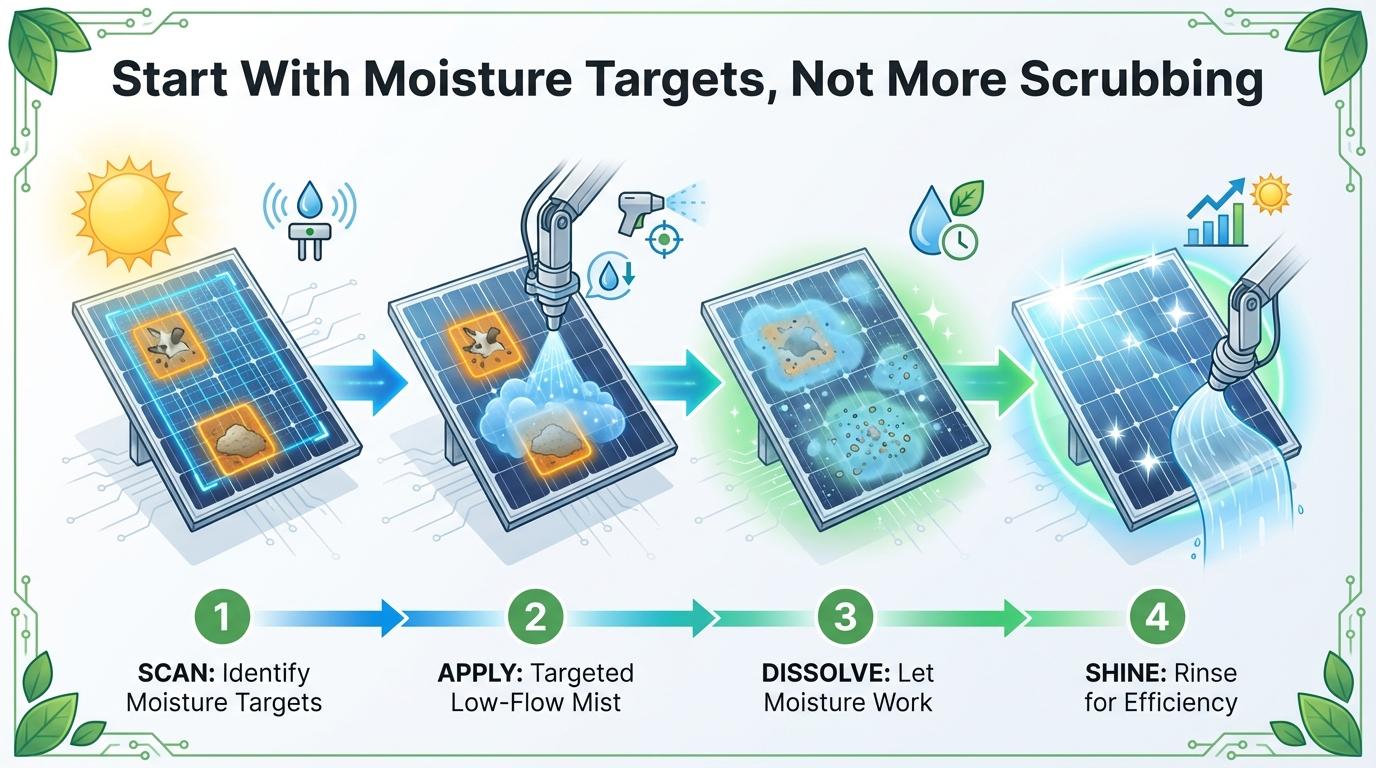
Start With Moisture Targets, Not More Scrubbing
What to control first
A moisture-first mold strategy works better than extra scrubbing because mold is mainly driven by damp surfaces and stagnant air. In rainy season, your first priority is drying air and surfaces quickly after cooking and washing.
Keeping indoor humidity in a controlled range is the practical target; aim for 45%–60% RH, and treat anything above 60% as action-needed. Mold pressure is highest in warm, wet kitchens, especially around 68–95°F.
Consistent cooking-time ventilation is non-negotiable: start airflow before heat builds, keep cross-flow while cooking, and continue 20–30 minutes after the flame is off.
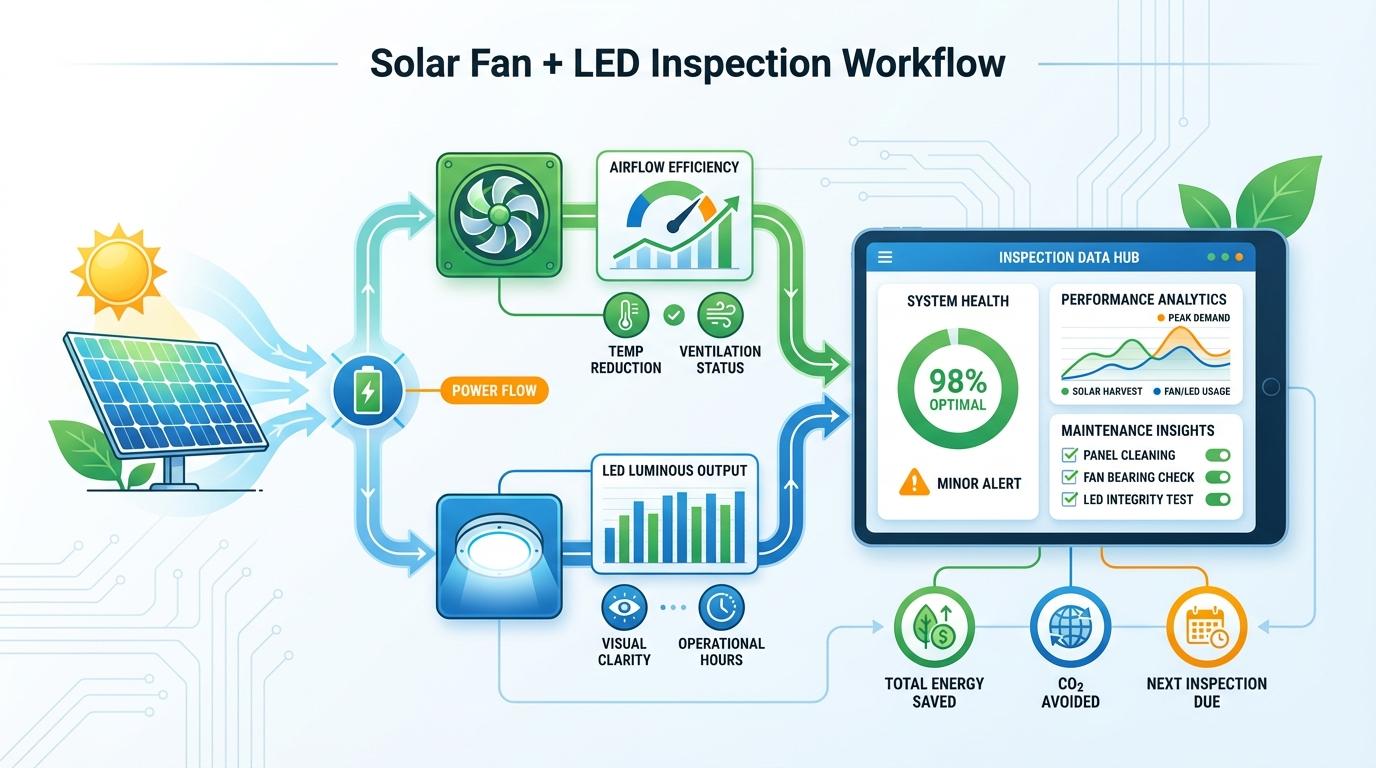
Solar Fan + LED Inspection Workflow
Why this works in low-power kitchens
A solar-powered cooling approach is useful where grid power is inconsistent because air movement lowers moisture load around food and walls. You do not need a complex system to get value; steady airflow and fast drying are the key wins.
Strong airflow path design matters more than fan size alone, so use a low intake (door gap or low window) and a high exhaust (high window or fan near ceiling height). This creates a clear path for hot, wet air to exit.
Fan + LED check flow (about 15 minutes nightly)
- 5 minutes before cooking, turn on the solar fan and open one low intake and one high outlet.
- During cooking, keep lids on whenever possible to reduce steam release.
- After cooking, keep fan and cross-ventilation running for 20–30 minutes.
- Use an LED light to inspect 5 hotspots: sink underside, wall corners, cutting board edge, grain-bin lid interior, and leftover container lids.
- If you see droplets or shine on surfaces, wipe dry and run airflow 10 more minutes.
- Log one line each night: “dry” or “damp” for each hotspot.
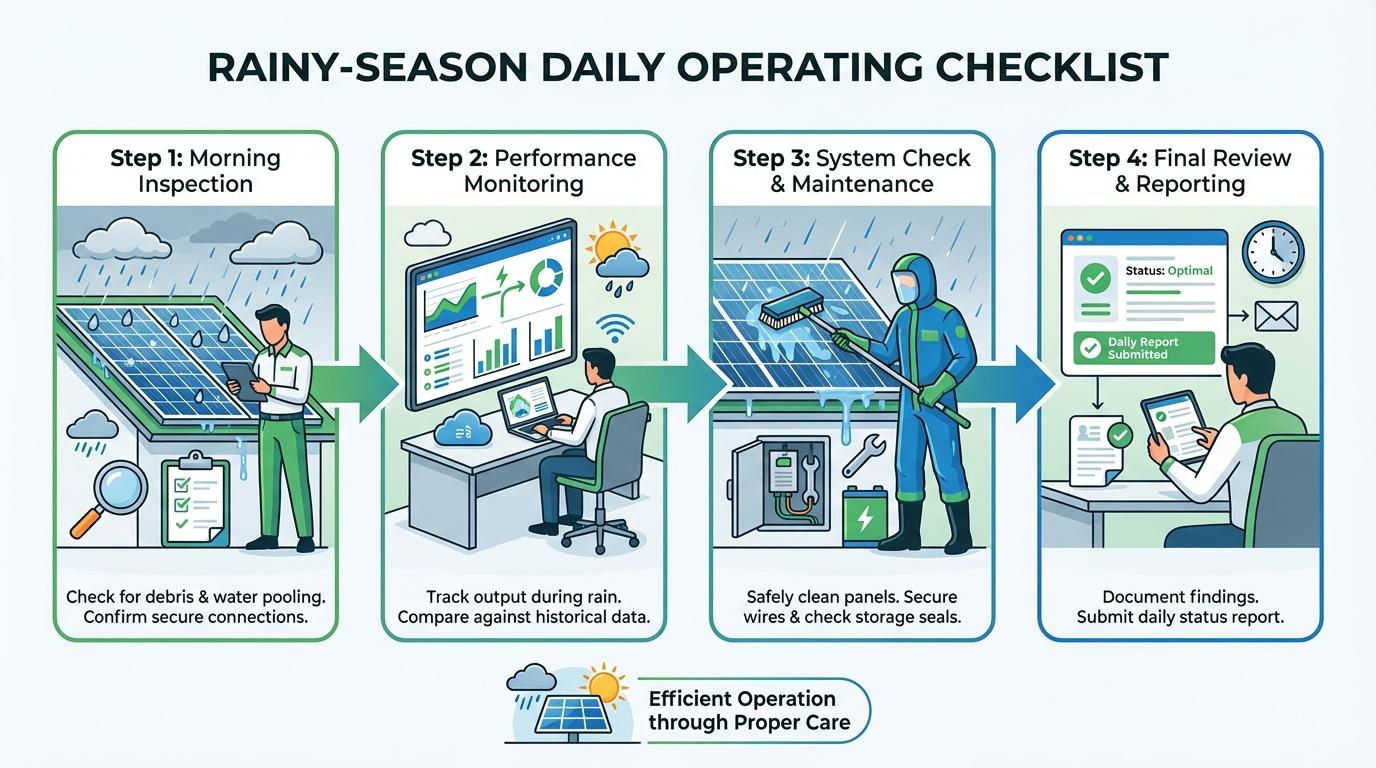
Rainy-Season Daily Operating Checklist
A dehumidifying-first routine works best when tied to fixed moments of the day, not “when there is time.” Keep this list visible and run it every day during rainy months.
Daily rainy-season checklist (6 steps)
- 7:00 AM: Open cross-ventilation for 10 minutes; check wall corners and sink base.
- Before each cook session: Run fan 5 minutes before heat starts.
- During cooking: Keep one inlet and one outlet open the whole time.
- After cooking: Dry the stove, sink, and backsplash; continue fan 20–30 minutes.
- 8:30 PM: Do the LED hotspot scan and re-dry any damp area.
- Before bed: Remove wet trash, hang cloths fully open, confirm no standing water.
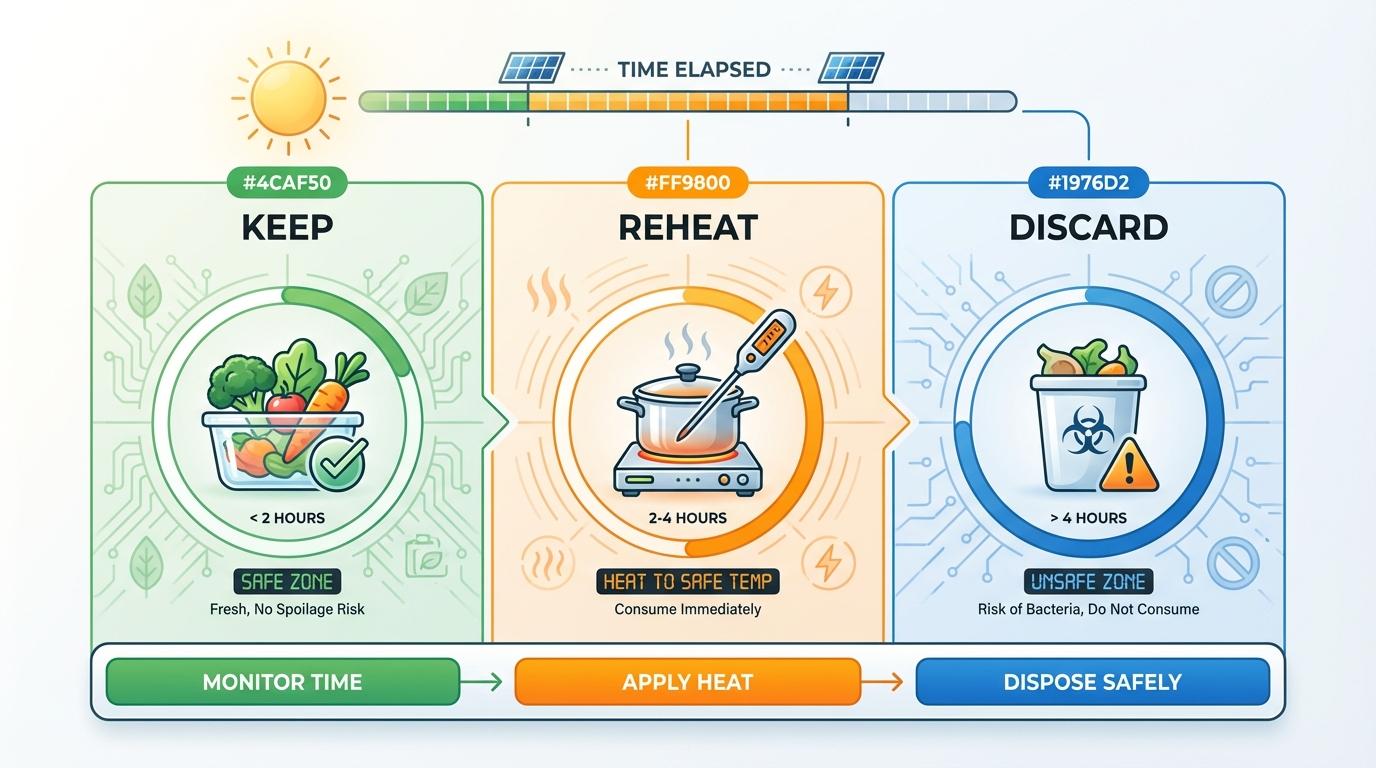
No-Fridge Spoilage Checks: Keep, Reheat, or Discard
Moisture content and storage conditions strongly affect how fast staples degrade, so dry goods should be sealed, elevated at least 8 in off the floor, and kept about 4 in off walls. Weekly checks for clumping, sour odor, and condensation inside lids are essential.
Applied postharvest quality practice favors fast sorting: once one item shows mold, slime, or strong off-odor, remove it immediately to prevent spread. In rainy weather, speed matters more than trying to salvage borderline food.
LED spoilage check table
| Food type | Keep if | Discard if | Immediate action |
|---|---|---|---|
| Rice, flour, beans | Dry, free-flowing, neutral smell | Clumped, sour, visible specks | Dry container, re-pack in small sealed batches |
| Leafy greens | Crisp stems, no slime | Slimy film, dark wet patches | Use same day or discard |
| Onions, potatoes | Firm, dry skin | Soft spots, wet rot smell | Remove bad unit, spread rest in single layer |
| Cooked food | Fresh smell, recently cooked | Sour smell, surface bubbles, sticky film | Reheat once only if still clearly safe; otherwise discard |
Real African User Case: Rainy-Season Kitchen in Kisumu, Kenya
A household in Kisumu ran a 21-day rainy-season log in a 10 ft × 12 ft kitchen with no refrigerator. Their main issues were musty evening odor, damp wall corners behind the stove, and frequent onion and leafy-green spoilage.
They installed a 12-in solar exhaust fan high on an exterior wall, then added a nightly LED check at 8:30 PM. They also moved all dry goods to shelves at least 8 in off the floor and 4 in from the wall, and switched to 1–2 day fresh-food purchasing.
By week 3, they reported fewer damp-wall alerts and less food discard, which aligns with a control-moisture-and-mold framework. The biggest driver was not one gadget, but consistent daily execution.
FAQ
Common questions come up once people start the fan-and-LED routine, especially around windows, rain timing, and leftovers.
Q: Is one open window enough during cooking?
A: Usually no. A high-low ventilation setup with one intake and one exhaust is much more effective than a single opening.
Q: Should I keep windows open all day in heavy rain?
A: No. Use short, controlled airing cycles and prioritize fan-assisted exhaust so outdoor humidity does not flood back in.
Q: What food should never be “trimmed and saved” once mold appears?
A: Soft or porous foods, cooked leftovers with off-odor, and visibly moldy staples should be discarded fully, not partially trimmed.
Practical Next Steps
Start small, but run the routine every day. Rainy-season mold control is mostly a consistency problem, not an equipment problem.
- Set up one low intake + one high exhaust path today.
- Run the 6-step daily checklist for 14 straight days.
- Track hotspot dryness and food discard count weekly, then adjust airflow time.
References
- https://keepsafeguide.enterprisecommunity.org/en/control-moisture-and-mold
- https://www.brooklynfan.com/humidity-control-why-its-important-and-how-to-achieve-it/
- https://www.sussexdampexperts.com/what-kitchen-ventilation-stops-condensation-from-cooking/
- https://www.academia.edu/104157047/Development_of_a_Solar_Powered_Evaporative_Cooling_Storage_System_for_Tropical_Fruits_and_Vegetables
- https://lifestyle.sustainability-directory.com/learn/how-can-airflow-be-optimized-in-a-passive-solar-drying-system/
- https://www.solencostore.com/blogs/news/preventing-mould-and-moisture-damage-in-industrial-warehouses-with-dehumidifiers
- https://www.academia.edu/33427294/Effect_of_moisture_content_and_storage_conditions_on_the_storability_of_garri
- https://www.sciencedirect.com/science/article/abs/pii/S0740002017302903

Ray Harlan
Ray Harlan is a seasoned American solar energy expert and Farseen's lead advocate for practical off-grid living. Born and raised in sunny California, with 14 years of hands-on experience in rooftop solar, microgrids, and real-world deployments across the U.S. and beyond, Ray has lived through everything from Texas blackouts and Florida hurricanes to Southeast Asian night markets and remote camping trips. He's not just theorizing-he has tested low-cost lighting and fan systems for street vendors, built emergency food preservation setups during multi-day power outages, and fine-tuned solar solutions for hot nights, kitchen ventilation, and disaster readiness. His mission is simple: turn sunlight into reliable, everyday power for families, small businesses, and outdoor enthusiasts. Every article he writes draws from field-tested insights, honest cost breakdowns, and straightforward step-by-step advice so you can confidently harness solar energy in your own life.