You can run cooling without rewiring if you match the right solar fan setup to your business hours and weather pattern.
Are people stepping up to your counter, feeling the heat, and walking off before they order? In one 30-day stall test, traffic rose 8%, orders from stoppers rose 6%, spend per order rose 5%, and return visits rose 3% after airflow and service flow were fixed together. You will get a clear day-to-night setup, a before/after case, and a rainy-season moisture checklist.
Why No-Wiring Solar Fans Matter
Comfort Changes Buying Behavior
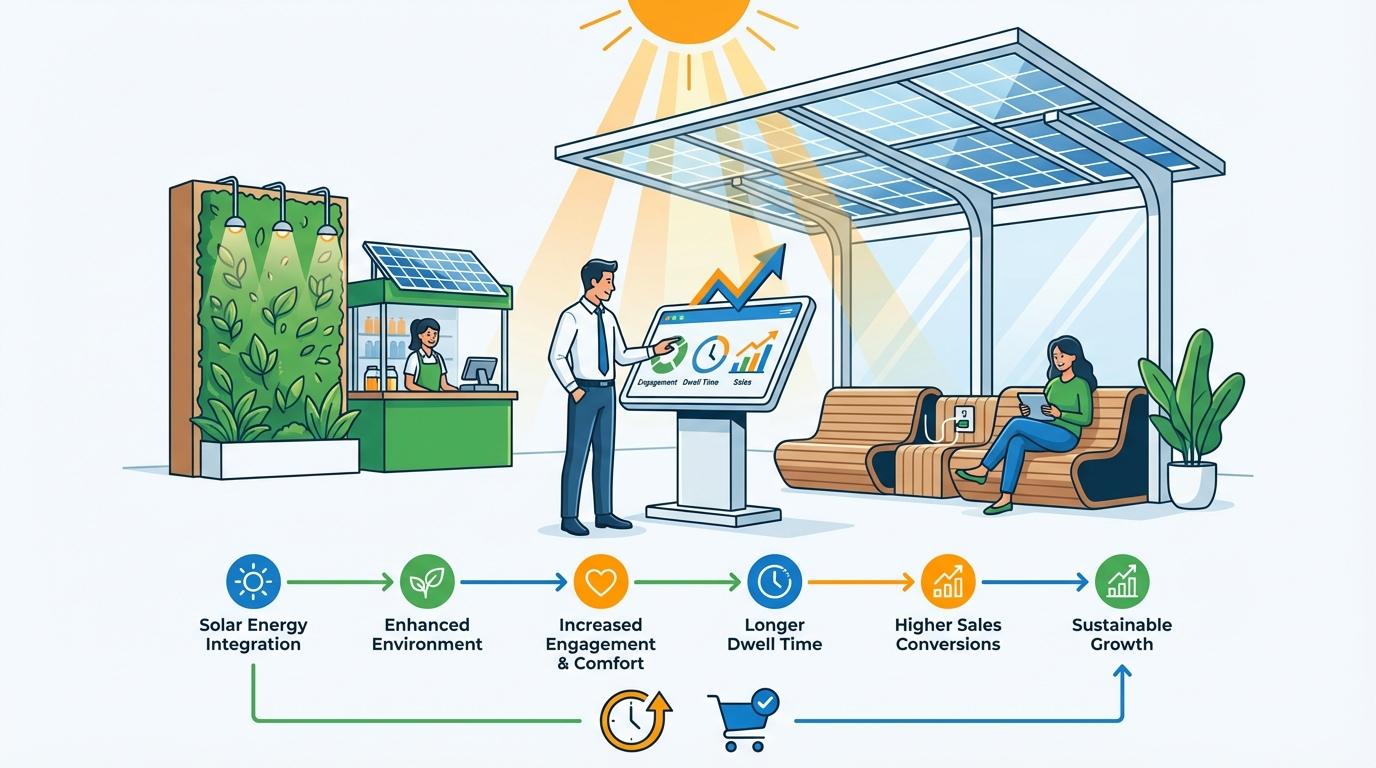
Many small vendors now use solar stall cooling to avoid trenching wires and keep service areas usable during hot hours. Better airflow often increases customer dwell time, and those extra seconds are usually enough to close an order or add-on.
Manufacturer solar fan owner guidance shows that direct-solar airflow is strongest in full sun and drops near dusk. That means daytime cooling and nighttime cooling should be planned as two separate needs.
What to Measure First
Track four numbers nightly for at least 3-7 days: passersby, people who stop, people who buy, and average ticket. This baseline tells you whether the fan is improving sales performance or only improving comfort.
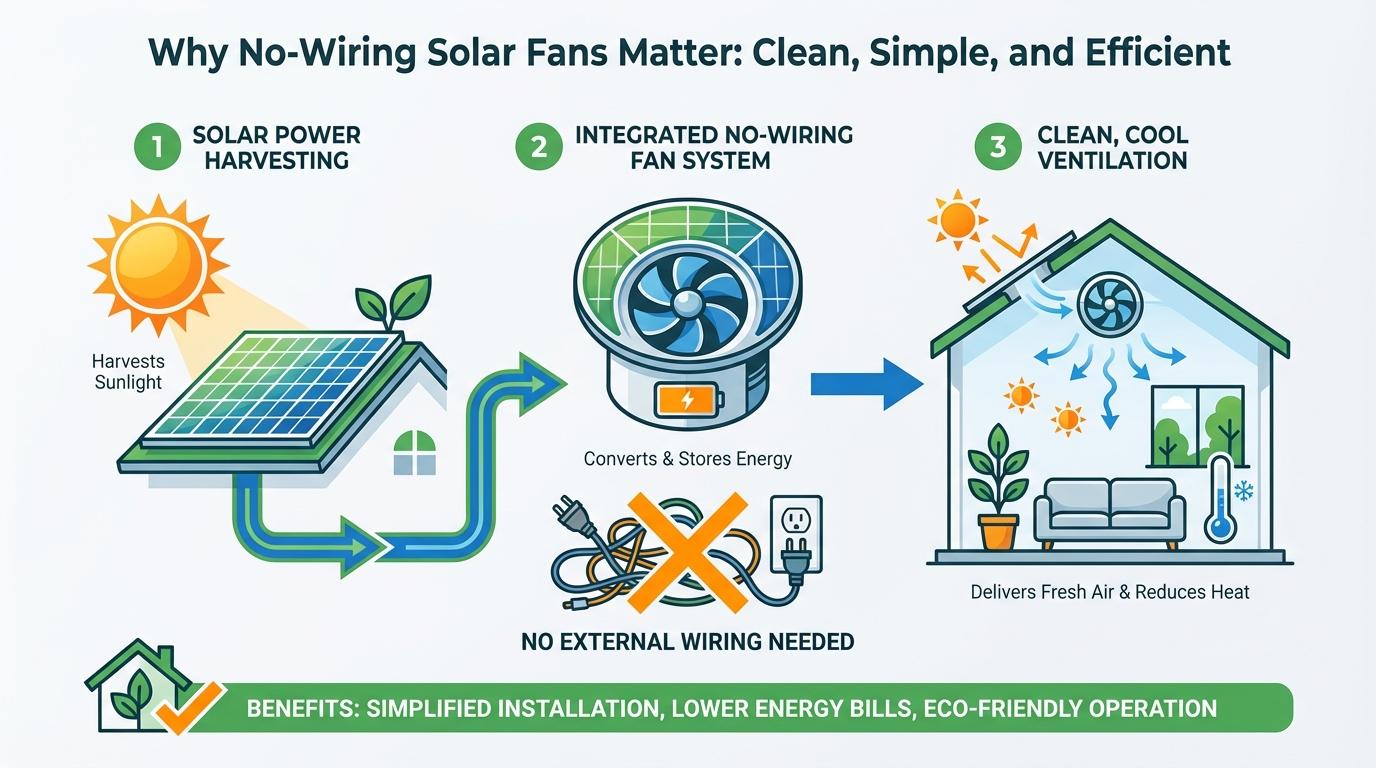
Before-and-After Case: 30 Days at One Street Stall
Baseline Week vs Optimized Week
A solar fan operating method works best when airflow changes are paired with line speed and offer structure. In this case, the owner added one fan for the queue zone and one for the prep zone, then logged the same metrics every night.
| Metric | Before (7-day baseline) | After (days 24-30) | Change |
|---|---|---|---|
| Average customer dwell time | 16 sec | 29 sec | +81% |
| Stop rate (stops/passersby) | 31% | 39% | +8 pts |
| Order rate (orders/stops) | 24% | 30% | +6 pts |
| Average ticket | $9.80 | $10.30 | +5% |
| Repeat-customer share | 12% | 15% | +3 pts |
| Peak wait time | 6 min 20 sec | 3 min 50 sec | -39% |
What Changed on the Ground
The operator pre-cooled 30 minutes before peak service, simplified rush-hour choices, and used one fixed upsell line at checkout. The result was compounding growth from several small gains instead of one risky change.
Choose the Right Day-to-Night Setup
Compare the Three Practical Options
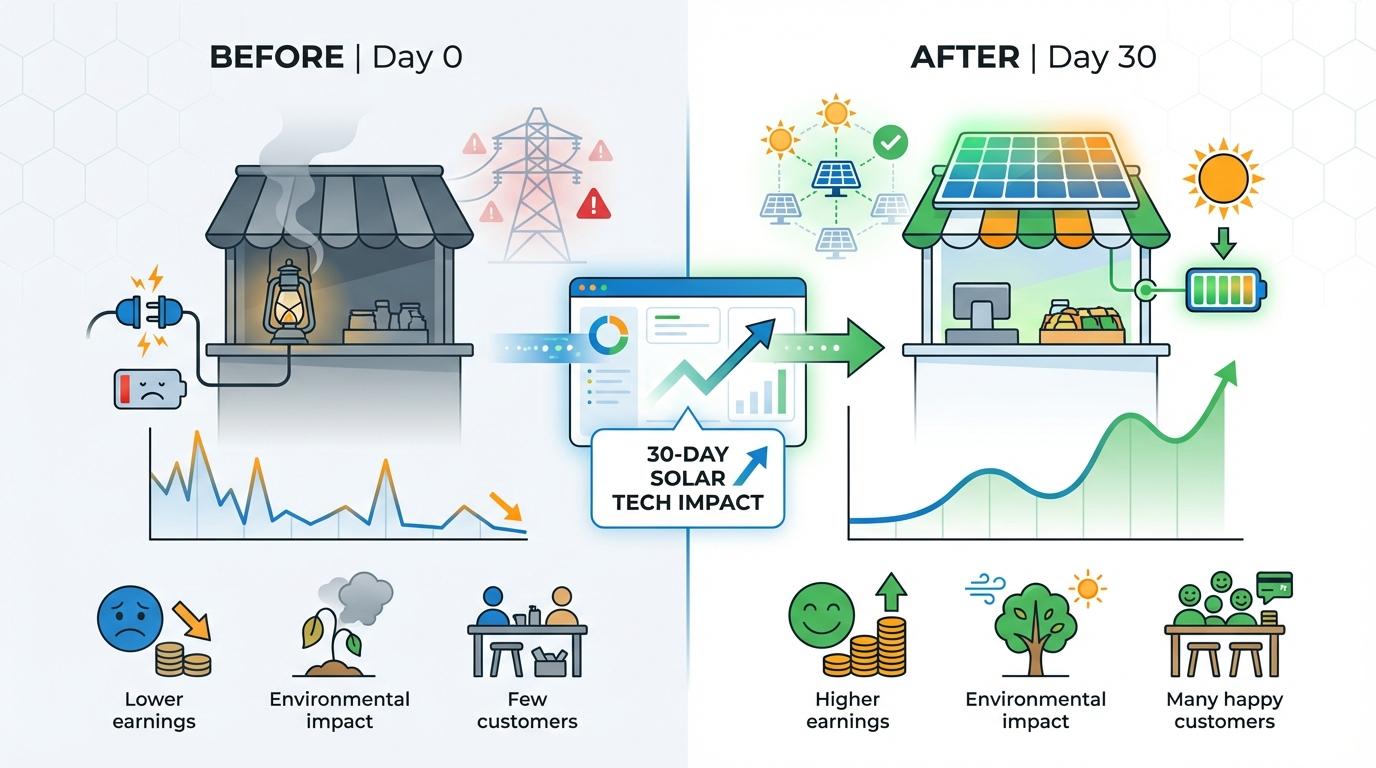
True day-to-night fan operation requires battery storage or a backup source after sunset.
| Setup | Best for | Day Performance | Night Performance | Typical Total Cost | Install Complexity |
|---|---|---|---|---|---|
| Panel + direct DC fan | Daytime-only kiosks | Strong in full sun | Off after dusk | $120.00-$260.00 | Low |
| Panel + fan + battery | Afternoon-to-late-night stalls | Strong and stable | 3-8 hrs (battery dependent) | $280.00-$650.00 | Medium |
| Hybrid solar + battery + backup + mosquito-light fan | Full evening operations | Strong and stable | Most reliable | $320.00-$780.00 | Medium-High |
A solar fan buying checklist helps prevent mismatches by checking fan voltage, panel wattage, and controller protection before you buy.
Quick Sizing Rule for Small Booths
A small-space solar fan range is usually enough for booths around 80-160 sq ft if airflow is aimed at customer standing zones and heat pockets behind equipment. For most small setups, start with one queue-facing fan and one prep-facing fan before adding more hardware.
Rainy-Season Moisture-Proof Tactics
Prevent Condensation and Corrosion
The SLR owner manual practices stress weather-safe mounting and protected wiring, which is critical during wet months. Most sudden failures in rainy season come from moisture ingress at connectors and controller boxes.
- Use a weatherproof box for controller and battery.
- Keep electronics at least 12 in above ground.
- Add drip loops on exposed cable runs.
- Seal cable entries with weather-rated glands.
- Keep spare fuses and dry wipes on site.
Wet-Weather Operating Routine
Run pre-cooling before rain starts, then switch to intermittent cycles when traffic drops. At closing, wipe fan housings, check connectors, and keep enclosures splash-protected but vented so trapped moisture can escape overnight.
Daily Playbook to Raise Dwell Time and Sales
Track the Four-Lever Scorecard
The small-business solar workflow performs best when you track traffic, order rate, average ticket, and repeat visits together. This avoids guessing and shows exactly which lever is lagging.
Use these weekly targets as a practical benchmark:
- Traffic: +8%
- Order rate: +5% to +6%
- Average ticket: +4% to +6%
- Repeat visits: +2% to +3%
Peak-Hour Rules That Protect Revenue
Start fan operation 30 minutes before peak time, keep rush-hour offers simple, and hold average wait time under 4 minutes. Use one fixed upsell prompt at payment, then stop; one clear offer is faster and usually converts better than multiple prompts.
FAQ
Q: Can a no-wiring solar fan run all night?
A: Not on direct solar alone. You need a battery or hybrid backup for nighttime runtime.
Q: What dwell-time target should I aim for first?
A: A practical first target is moving average dwell from about 15-20 seconds to 25+ seconds, then checking if order rate rises with it.
Q: What is the top rainy-season mistake?
A: Leaving connectors and controllers exposed low to the ground. Moisture ingress causes more failures than fan motor wear.
Practical Next Steps
- Record 7 nights of baseline numbers before buying gear.
- Pick your setup based on closing time, not only daytime sunlight.
- Install rainy-season moisture protection from day one.
- Review performance on day 7, day 14, and day 30.
For an evening-first small business, start with a Farseen solar fan model that includes a mosquito lamp, so airflow and insect control are handled in one unit.
References

Ray Harlan
Ray Harlan is a seasoned American solar energy expert and Farseen's lead advocate for practical off-grid living. Born and raised in sunny California, with 14 years of hands-on experience in rooftop solar, microgrids, and real-world deployments across the U.S. and beyond, Ray has lived through everything from Texas blackouts and Florida hurricanes to Southeast Asian night markets and remote camping trips. He's not just theorizing-he has tested low-cost lighting and fan systems for street vendors, built emergency food preservation setups during multi-day power outages, and fine-tuned solar solutions for hot nights, kitchen ventilation, and disaster readiness. His mission is simple: turn sunlight into reliable, everyday power for families, small businesses, and outdoor enthusiasts. Every article he writes draws from field-tested insights, honest cost breakdowns, and straightforward step-by-step advice so you can confidently harness solar energy in your own life.