IP Ratings, Decoded
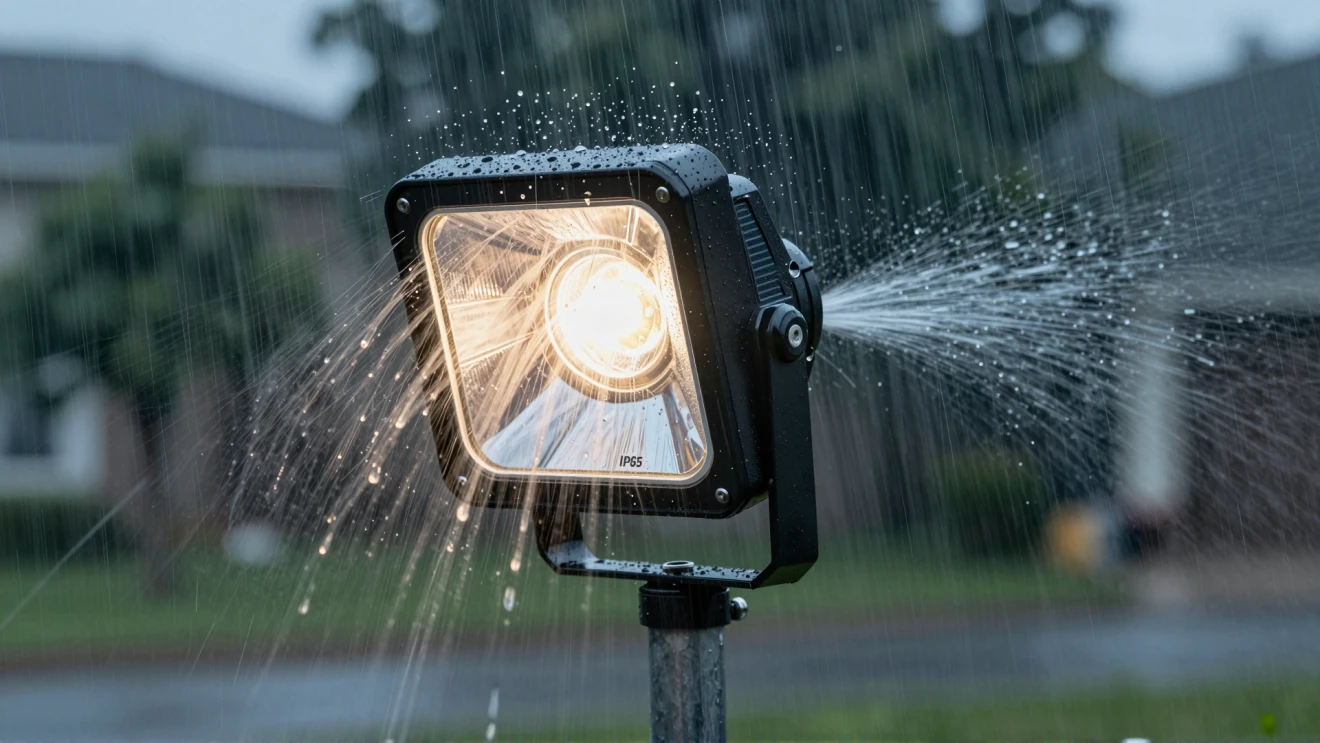
“IP” stands for Ingress Protection. The first digit rates resistance to solids (0–6); the second rates resistance to water (0–9/9K). IP65 means “6” dust‑tight (no dust ingress) and “5” protection against water jets from any direction—exactly what wind‑driven rain mimics. IP66 steps up to stronger jets, while IP67 adds temporary immersion. IP68 is for continuous submersion under manufacturer‑specified conditions.
Sources such as Revolve LED and Clear Sky Distributors explain that IP65/66 cover most outdoor lighting exposures, while IP67/68 should be reserved for locations where standing water or immersion are credible risks. IP ratings don’t judge UV resistance, chemicals, or impact; they only score ingress.
Why IP65 Hits the Sweet Spot
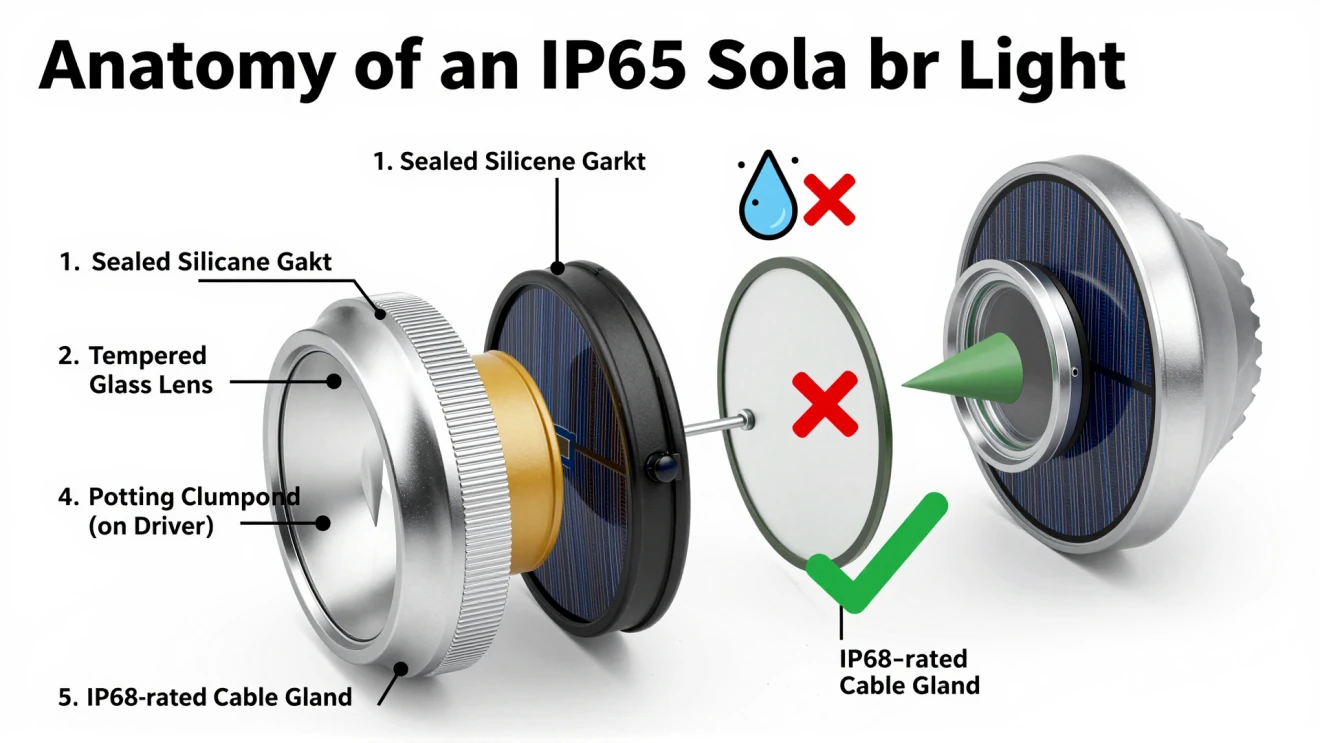
In the field, IP65 is enough for heavy rain on roads, parks, suburban paths, and most residential yards, according to ADN Solar Street Light and Clear Sky Distributors. It blocks dust, shrugs off wind‑driven rain, and keeps costs sane. I’ve outfitted off‑grid cabins and homesteads where IP65 fixtures outlasted budget options simply because their seals and cable glands were specified—and maintained—properly.
Pushing to IP66 can add stronger seals and adhesives that make fixtures harder to service and more expensive to repair (ADN Solar Street Light). For most climates that don’t see frequent high‑pressure washdowns or extreme storms, IP65 balances reliability, maintainability, and budget.
What Most Guides Miss
- Over‑sealing can trap heat; without good thermal paths, LED drivers and batteries age faster. Serviceable gaskets often beat permanent glue in long‑term ownership.
When to Step Up: IP66, IP67, IP68
Use the IP scale to match credible exposure, not to chase the biggest number. Clear Sky Distributors and Revolve LED offer this practical mapping:
| Rating | Water Exposure | Typical Uses |
|---|---|---|
| IP44 | Splashes only | Covered patios/eaves, decorative string lights |
| IP65 | Rain, water jets | Paths, gardens, driveways, general outdoor areas |
| IP66 | Powerful jets/hose‑down | Coastal storms, industrial sites, shipyards |
| IP67 | Temporary immersion | Flood‑prone low spots, near pools/fountains |
| IP68 | Continuous immersion | Underwater luminaires in ponds/pools |
IP67/68 are rarely needed for solar path or wall lights unless you expect flooding or submersion. Paying for immersion ratings where they’re not needed can reduce serviceability and raise lifetime cost (ADN Solar Street Light).
Reality Check: Limits of IP in the Wild
IEC 60529 tests are lab‑controlled, short‑duration, and typically use clean water on new products. Real life adds salt, soaps, fertilizers, UV, thermal cycling, and wear that degrade seals over time; testing while powered isn’t required, even though pressure differentials can change ingress risk (SKKU PHM Lab). Translation: IP is a starting point, not a lifetime guarantee.
Moisture and condensation also matter. Intelamp notes fogging inside lenses can cut brightness by up to 40%. Good sealing helps, but so does smart placement and seasonal checks. In dusty regions, superhydrophilic nano‑textured coatings on glass have shown roughly 2.5× better anti‑soiling performance in field reports (DIY Solar Forum), reducing cleaning water and preserving output between storms.
Buy and Install for the Whole System, Not Just the Label
- Specify IP65 minimum for exposed outdoors; step to IP66/67 only when justified by climate, proximity to hose‑downs, or flood risk (ADN Solar Street Light; Clear Sky Distributors; Revolve LED).
- Ensure the entire chain matches IP: fixture, connectors, cable glands, junction box, and battery compartment (Revolve LED).
- Prefer serviceable designs with gaskets over permanent adhesives; ask vendors about sealing processes, condensation vents, and repairability (ADN Solar Street Light).
- Size the system: choose quality panels, ample battery capacity (e.g., LiFePO4 for cycling and thermal stability), and a tuned controller; these drive reliability more than IP alone (ADN Solar Street Light).
- Install for drainage and survivability: tilt panels, avoid low‑lying spots, secure mounts against wind, and keep sprinkler heads aimed away (Sunlurio; Parc Lighting; Hardoll).
Low‑Upkeep Habits That Extend Life
A little care goes far. Clean solar panels periodically with a soft cloth and mild soap; dust and pollen reduce charge and shorten night runtime (Outdoor Solar Store; True Lumens). Inspect gaskets, cable glands, and seams before and after rainy seasons; replace brittle gaskets and re‑seal compromised joints with outdoor‑grade silicone (Parc Lighting; Hardoll).
If you spot internal moisture, dry the unit thoroughly, replace damaged seals, and reassemble with fresh sealant. Persistent fogging often signals end‑of‑life for budget housings (Intelamp). In harsh winters or monsoon regions, temporary off‑season storage can dramatically extend service life—especially for decorative lights with thinner housings (Hardoll; Outdoor Solar Store).
FAQ: Fast Answers
- Is IP65 enough for storms? Usually yes—heavy rain and wind‑driven spray are within IP65; use IP66 for high‑pressure jets or extreme exposure (Clear Sky Distributors).
- Do I need IP67 near a pool? Only if temporary immersion is likely; otherwise IP65/66 typically suffice for splash and spray (Revolve LED).
- Why did my “waterproof” light dim after a year? Likely condensation, UV haze, or degraded seals; cleaning and seal replacement can help, but some housings aren’t serviceable (Intelamp).
- Does a higher IP always last longer? Not necessarily; higher IP can increase heat and hinder maintenance—match rating to environment (ADN Solar Street Light).
- One part is IP65, another is IP44—what’s my system rating? The lowest‑rated component governs the real‑world protection (Revolve LED).
Cited sources: ADN Solar Street Light, Clear Sky Distributors, Revolve LED, Lumary, Intelamp, DIY Solar Forum, True Lumens, Outdoor Solar Store, Parc Lighting, Hardoll, SKKU PHM Lab.

Olivia Martin
Olivia Martin is part of the Farseen editorial team.