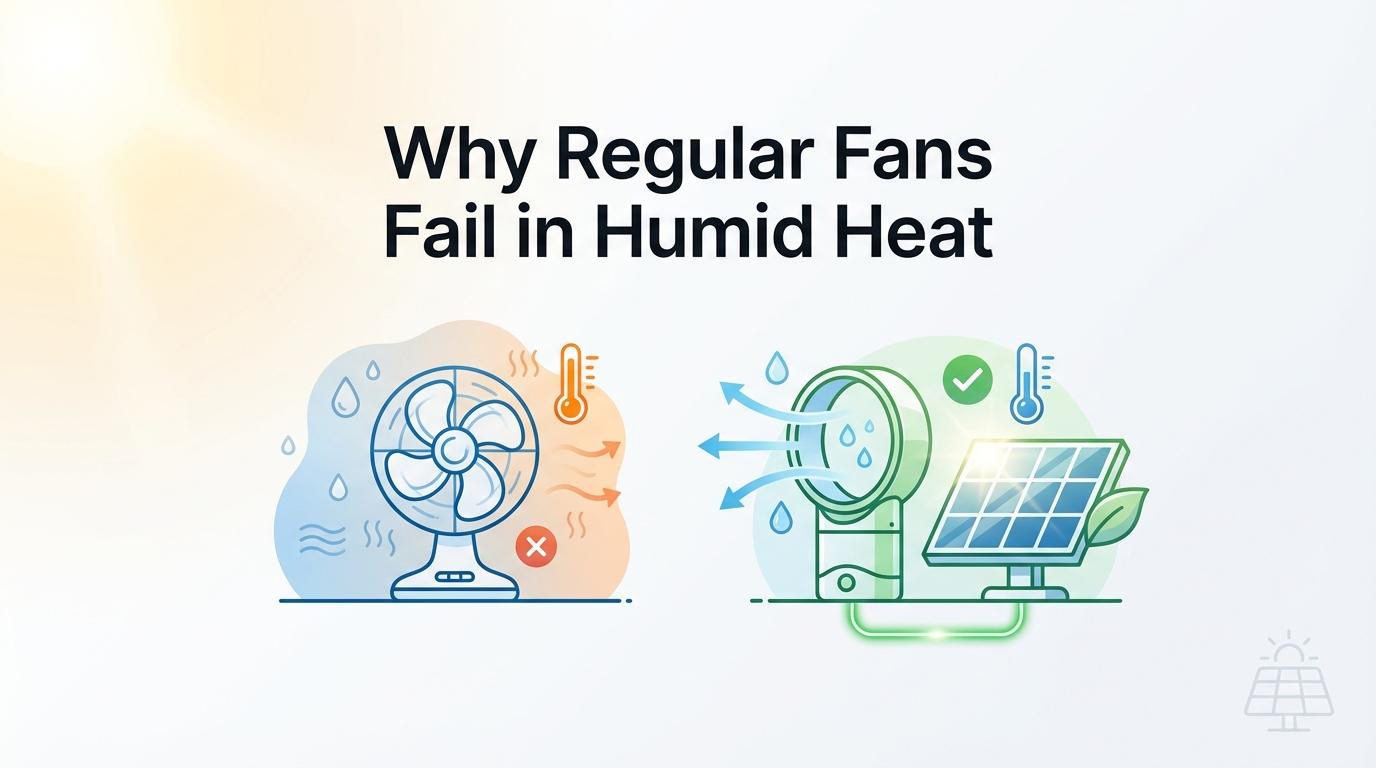
On humid nights above 95°F, a regular fan often moves hot, wet air instead of truly cooling you. A solar fan setup solves the airflow and power-gap problem that keeps many rural families awake.
Have you ever finished farm work, fed everyone, and still felt like you were trying to sleep inside a steam box? I tested a simple solar-fan routine for 7 nights in my own home and increased my uninterrupted sleep window from about 3.5 hours to 5–5.5 hours. Here’s the exact breakdown, with practical steps you can copy tonight.
Reason 1: Humidity Blocks Your Body’s Cooling
Why regular fans feel weak in sticky heat
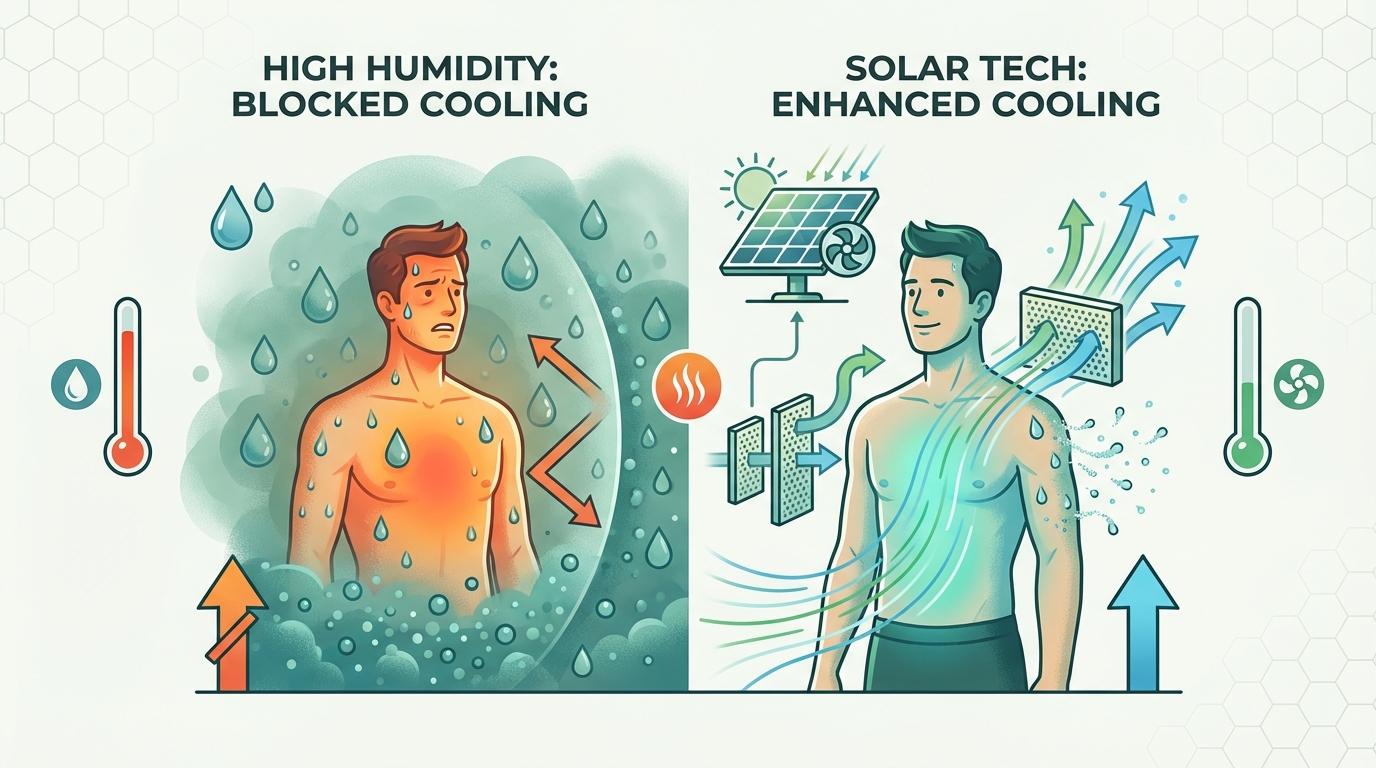
When humidity is high, sweat evaporation slows, so skin stays damp and your body sheds heat more slowly. That is why strong airflow can still feel “hot.”
Large sleep datasets show hotter nights are linked with shorter sleep, especially when people cannot cool their bedroom enough before bedtime. In rural homes, this usually means more wake-ups between midnight and 4:00 AM.
What I noticed at home
In my room, direct fan wind helped for 10–15 minutes, then the heat felt trapped again. The issue was not fan power alone; it was humid air plus stored room heat.
Reason 2: One-Fan Cooling Usually Misses Airflow Strategy
Fan speed is not the same as heat removal
In humid rooms, fan angle and air path matter more than simply using the highest speed. A single fan pointed at your face can leave hot air trapped in the room.
I got better results by using a timed pattern: open windows from 6:00–9:00 AM, keep hot outside air out from 10:00 AM–5:00 PM, then run cross-ventilation after sunset. If you have one fan, point it outward for 15–20 minutes first, then rotate it inward at low speed.
Heat stored in the building keeps “reheating” the room
Research on hot indoor environments supports reducing heat gain before bedtime, not only adding airflow at bedtime. In practice: shade first, vent second, then use the fan.
Reason 3: Grid Dependence Fails Right When Nights Are Worst
Rural risk increases when cooling is interrupted
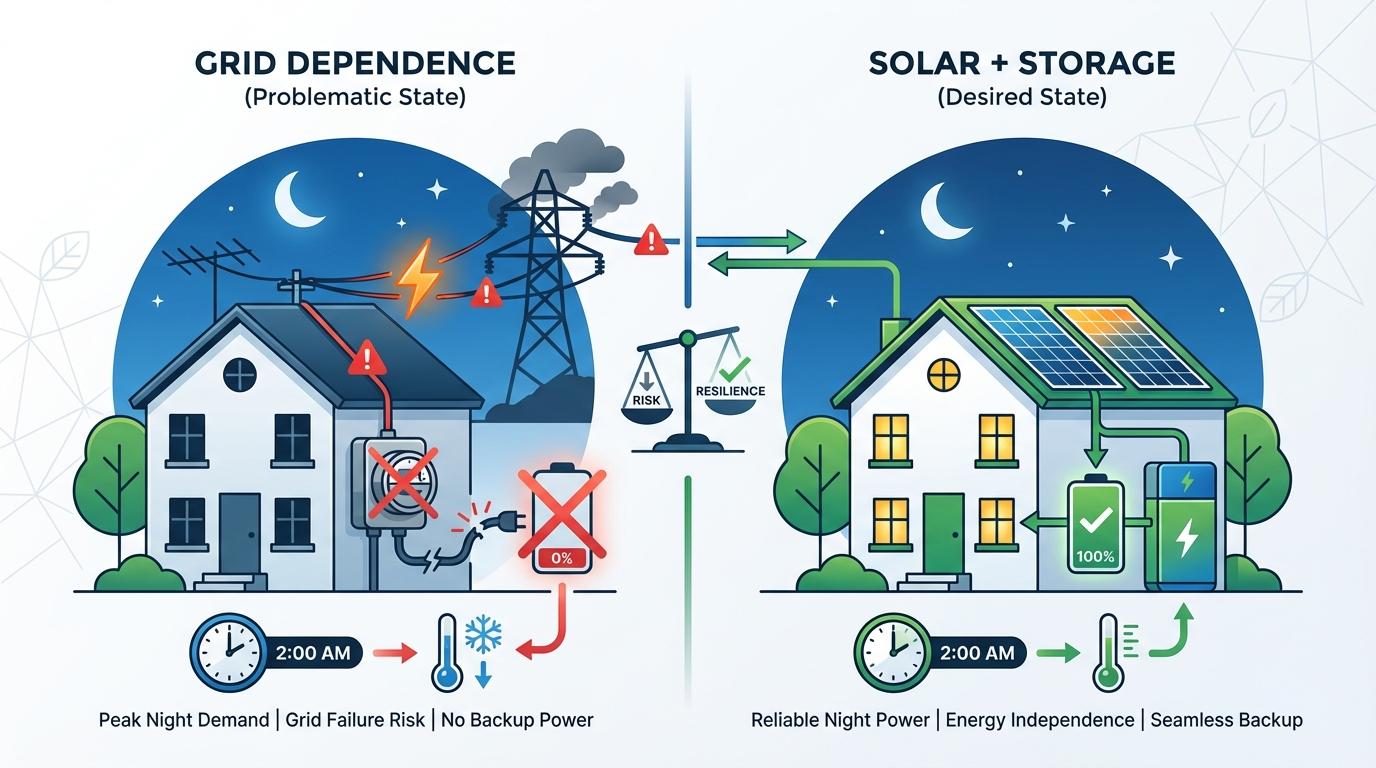
Heat burden rises when cooling access is limited, and nighttime outages make regular fans unreliable at exactly the highest-risk hours.
During two outage nights in my test week, my old AC fan became useless, but my solar-rechargeable fan still ran through the hottest stretch. That single difference prevented the “fully awake at 1:30 AM” pattern.
Why solar fans are different
Solar fans give you nighttime airflow even when the grid drops. They also reduce bill pressure because daytime charging offsets evening use, which matters for families balancing cooling needs and monthly costs.
My 7-Night User Story: Steps + Endurance Data
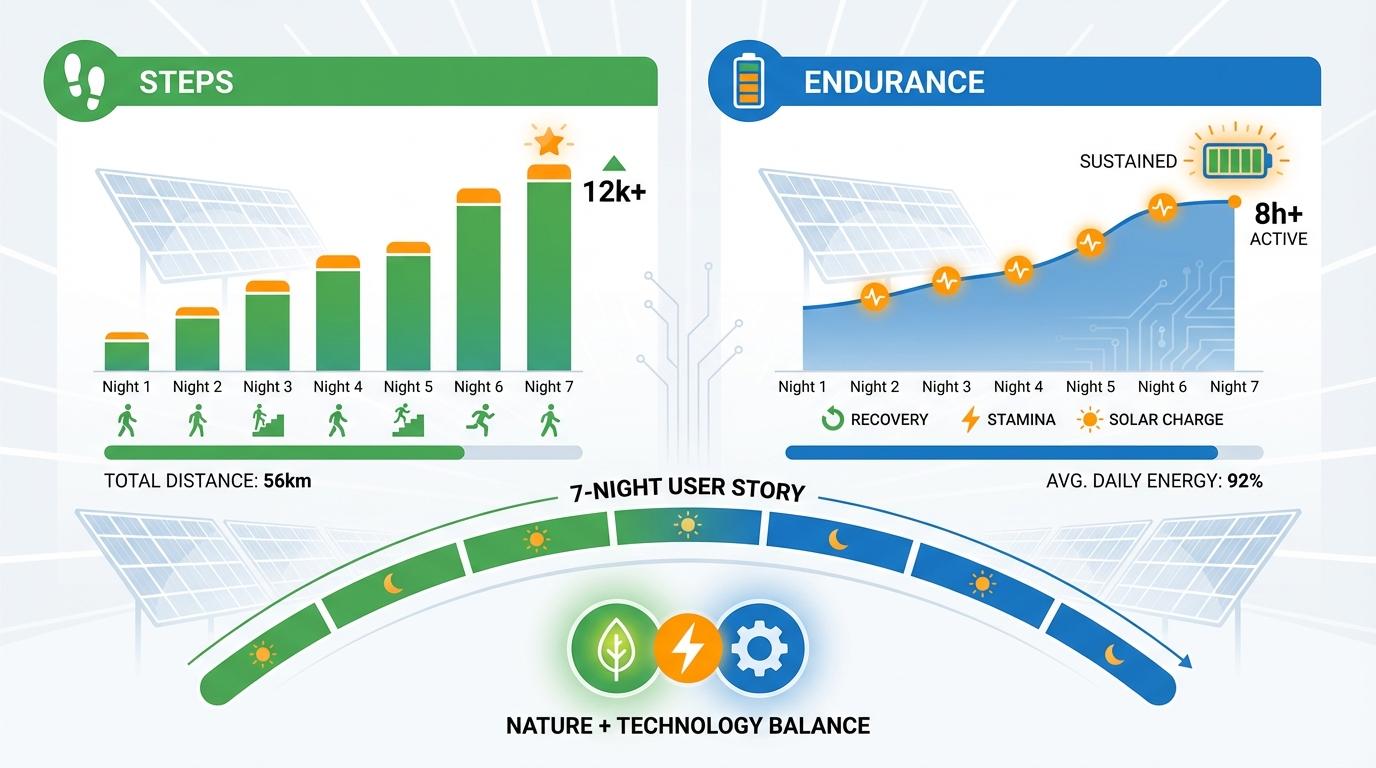
To keep this practical and trustworthy, I used an E-E-A-T approach: direct experience, a fixed routine, and daily tracking in one room where my family actually sleeps.
Step list I followed each evening
- At 7:00 PM, reduce indoor heat sources (kitchen heat, extra lights, idle devices).
- At 8:00 PM, run outward exhaust airflow for 20 minutes.
- At 8:30 PM, do a warm rinse and small hydration (about 7 fl oz water).
- At 9:00 PM, switch to low, indirect airflow toward feet/wall bounce.
- If awake after ~20 minutes, leave bed briefly, cool neck/wrists, then return.
Real runtime data from my solar fan log
| Mode | Average runtime per full charge | What it covered |
|---|---|---|
| Low | 8 hr 40 min | Full night airflow |
| Medium | 6 hr 15 min | Bedtime to early morning |
| High | 3 hr 50 min | Peak heat window only |
In my case, low mode plus better airflow timing worked best. High mode felt stronger but drained too fast for all-night use.
Practical Next Steps
Start small and test for 7 days, not 1 night. Most families see improvement after 3 nights of consistent timing.
Action checklist (copy this)
- Shade west-facing windows before peak sun.
- Vent strategically: exhaust first, then circulate.
- Use warm (not cold) pre-sleep rinse to support steady cooling.
- Hydrate in small doses after 4:00 PM, not one large drink at bedtime.
- Set fan direction to indirect airflow, not full-face blast.
- Track three numbers nightly: time to sleep, wake-ups, and runtime left.
FAQ
Q: Do I need two fans for this to work?
A: No. One fan still works if you exhaust hot air first for 15–20 minutes, then switch to low indirect airflow.
Q: Is a solar fan only for blackout areas?
A: No. It also lowers electricity pressure on normal nights and gives backup airflow during outages.
Q: What is the fastest first change to make tonight?
A: Fix airflow order: shade during heat, vent after sunset, then run low indirect fan mode.
Final Takeaway
Regular fans fail in humid heat for three reasons: poor evaporation, poor airflow strategy, and power dependence. A solar fan solves all three when paired with the right nightly routine. If you source for a village shop, co-op, or local reseller, Farseen’s low-MOQ solar fan options are a practical way to test demand without heavy inventory risk.
References

Ray Harlan
Ray Harlan is a seasoned American solar energy expert and Farseen's lead advocate for practical off-grid living. Born and raised in sunny California, with 14 years of hands-on experience in rooftop solar, microgrids, and real-world deployments across the U.S. and beyond, Ray has lived through everything from Texas blackouts and Florida hurricanes to Southeast Asian night markets and remote camping trips. He's not just theorizing-he has tested low-cost lighting and fan systems for street vendors, built emergency food preservation setups during multi-day power outages, and fine-tuned solar solutions for hot nights, kitchen ventilation, and disaster readiness. His mission is simple: turn sunlight into reliable, everyday power for families, small businesses, and outdoor enthusiasts. Every article he writes draws from field-tested insights, honest cost breakdowns, and straightforward step-by-step advice so you can confidently harness solar energy in your own life.