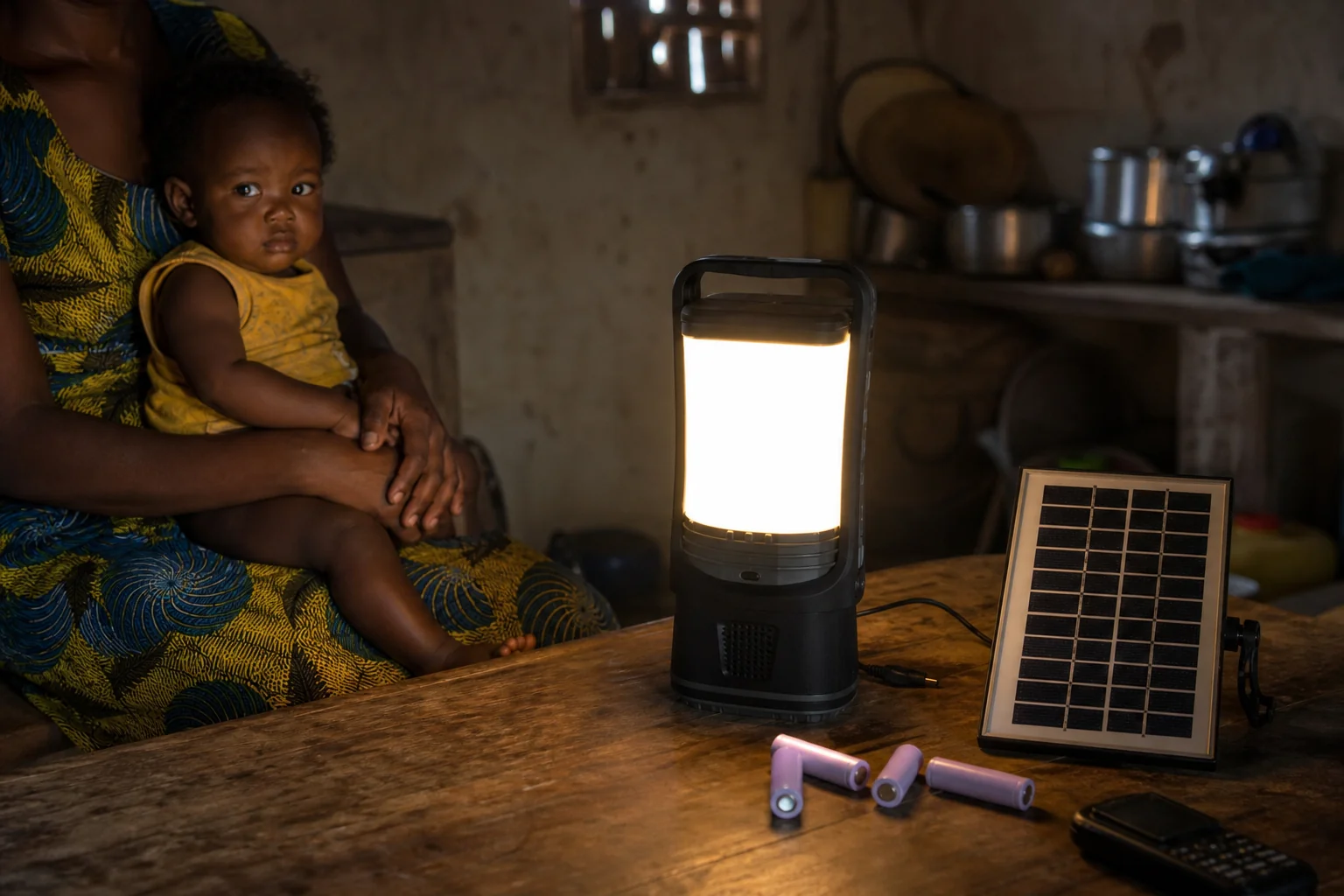
Removable batteries turn a solar emergency lamp from a disposable gadget into a repairable, longer-lived backup light. They matter most when outages last more than one night, winter charging is weak, or the battery wears out before the LED or solar panel does.
Is your emergency lamp dim after a full day in the sun, or dead right when a storm knocks out power? In hands-on checks of cabin, shed, and outage lighting, the most common failure is not the LED or the solar panel; it is a tired rechargeable battery that can no longer hold enough charge. Here is how removable batteries improve reliability, lower waste, and help you choose a lamp that will still be useful several seasons from now.
The Battery Is the Real Emergency Feature
A solar emergency lamp is simple on the surface: a small solar panel charges a battery during the day, and the battery powers LEDs at night. The important part is that the lamp does not run directly on sunshine when you need it most. It runs on stored energy.
That same logic applies from small lamps to full off-grid systems. In an off-grid solar kit, battery storage is central because daytime solar production has to cover nighttime use, cloudy weather, and outages. A lamp is a tiny version of that system. If its battery is weak, the whole product becomes unreliable, no matter how good the panel looks.
For a practical example, imagine a 5-watt LED emergency lamp used for four evening hours. That is about 20 watt-hours of demand. If the built-in battery has degraded to half its original usable capacity, the lamp may still turn on, but it may fade early, flicker, or shut down before bedtime. A removable battery gives you a direct repair path instead of forcing you to replace the whole lamp.
What “Removable Battery” Means
A removable battery is a rechargeable cell or pack that the user can access and replace without destroying the lamp housing. In small solar lamps, this may be an AA-size NiMH cell, a cylindrical lithium cell, a LiFePO4 pack, or a small 12-volt-style pack in larger emergency fixtures.
This does not mean every battery is interchangeable. Voltage, chemistry, capacity, physical size, connector shape, and charge-controller compatibility all matter. A 3.2-volt LiFePO4 cell should not be swapped casually with a 1.2-volt NiMH cell or a 3.7-volt lithium-ion cell. The lamp’s charging circuit was designed around a specific battery behavior, and a mismatch can shorten battery life or create a safety risk.
Why Removable Batteries Improve Reliability
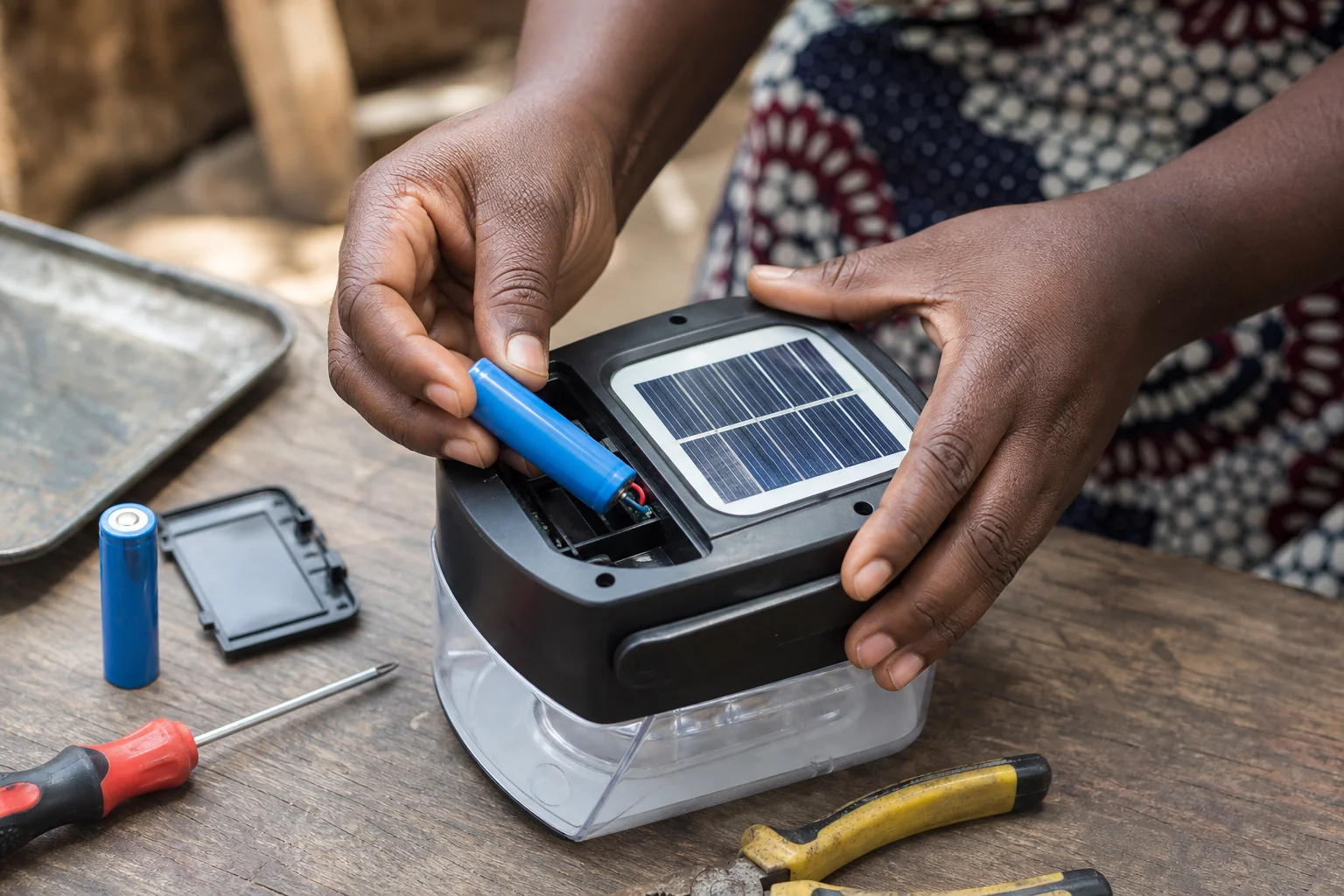
The most practical reason is serviceability. Rechargeable batteries age with charge cycles, heat, cold, and deep discharge. Solar panels and LEDs can often outlast the battery, especially in modest-output emergency lamps used seasonally. When the battery is removable, a dim lamp can often be restored with a correctly matched replacement.
Removable batteries also let you keep spares charged. For storm season, a cabin trip, or a wildfire-preparedness kit, having one spare compatible battery can be more useful than owning three cheap sealed lamps. If the first battery is depleted after a long night, you can swap in the spare while the original recharges during daylight or from USB if the lamp supports it.
This matters even more in low-sun seasons. Off-grid lighting users often underestimate winter because days are shorter, panels collect less light, and cold batteries deliver less usable energy. Cabin users in the small off-grid lighting discussion repeatedly focused on actual watt-hour needs before buying equipment because a few LED lights can run well on a simple battery system only when capacity and losses are realistic.
Repairability Reduces Waste
A sealed solar lamp with a dead battery becomes electronic waste even if the panel, housing, LEDs, switch, and wiring still work. A removable-battery lamp separates the worn part from the durable parts.
That is better for your wallet and usually better for the environment. Large energy-storage projects show why battery choice and end-of-life handling matter. The Consortium for Battery Innovation highlights high recycling rates as one reason advanced lead batteries remain relevant in renewable and resilience projects. Small lamps use different formats, but the principle is the same: a product designed for battery replacement is easier to maintain responsibly than one designed as a sealed throwaway.
In practice, this means checking whether the battery compartment uses screws instead of glue, whether the battery label is readable, and whether the manufacturer lists replacement specifications. If you cannot identify the cell type before purchase, assume future repair will be harder.
Removable vs. Sealed Batteries
| Feature | Removable Battery Lamp | Sealed Battery Lamp |
|---|---|---|
| Long-term reliability | Easier to restore after battery aging | Often replaced when runtime drops |
| Emergency readiness | Can use charged spare batteries | Depends on one internal battery |
| Waste profile | Lower if parts are reused | Higher if the lamp is discarded |
| Weather sealing | May be slightly harder to seal well | Often easier to waterproof |
| User responsibility | Requires correct replacement choice | Simpler for users who never service gear |
The tradeoff is weather resistance. A sealed lamp can be easier to protect from rain, dust, and corrosion. A removable-battery lamp needs a well-gasketed compartment, corrosion-resistant contacts, and a design that closes firmly after replacement. For outdoor emergency use, do not choose repairability while ignoring water intrusion.
Battery Chemistry: What to Look For
NiMH batteries are common in small solar garden and emergency lights because they are affordable, widely available, and less problematic than older nickel-cadmium cells. They are a reasonable choice for mild climates and low-to-moderate brightness.
Lithium-ion batteries offer higher energy density, which helps when the lamp needs stronger light or a compact body. The downside is that heat and poor charging control can shorten life, so quality circuitry matters.
LiFePO4 batteries are often the best fit for serious off-grid and emergency use because they are stable, durable, and well suited to repeated cycling. Larger off-grid battery guidance often favors lithium iron phosphate for high cycle life, thermal stability, and safety, while noting that lead-acid types are cheaper but heavier and generally shorter-lived; lithium iron phosphate batteries are especially attractive where weight, usable capacity, and low maintenance matter.
For a lamp, the best chemistry is the one the manufacturer designed for and documents clearly. A removable battery is only an advantage if replacements are available and safe.
How Removable Batteries Help During Real Outages

Picture a rural home with two solar emergency lamps: one in the kitchen and one near the stairway. After a cloudy day, both lamps charge poorly. If they use sealed batteries, you are stuck with whatever charge they captured. If they use removable batteries, you can rotate in charged spares, top up a battery from a portable power station if supported, or replace a weak cell before the next storm.
This is the same resilience logic used in larger renewable lighting systems. A review of public lighting projects found that battery energy storage helps renewable-powered lights work when generation and demand do not happen at the same time. Your emergency lamp is smaller, but the timing problem is identical: solar charging happens by day, while the need for light happens at night.
What to Check Before Buying
Start with runtime and brightness, but do not stop there. A lamp that claims long runtime at very low brightness may disappoint during real tasks like cooking, first aid, or checking a breaker panel. For indoor outage use, low and medium modes are valuable because they stretch the battery without leaving you in the dark.
Then inspect the battery details. The lamp should state battery chemistry, voltage, capacity, and replacement access. If the compartment opens with common screws and the battery has a standard label, that is a good sign. If the product only says “rechargeable battery included,” long-term support is uncertain.
Also check charging options. Solar-only lamps are useful, but hybrid charging adds resilience. USB charging can save a lamp during several cloudy days, especially if you also keep a power bank or portable solar generator charged. For off-grid homes, the broader solar planning lesson still applies: solar panels, batteries, and charge controllers have to work as a matched system, even when they are miniaturized inside a lamp.
When a Sealed Battery Still Makes Sense
A sealed battery is not automatically bad. For a compact waterproof lantern carried in a wet backpack, used on a boat, or stored in a damp shed, a sealed design may hold up better if the manufacturer uses quality cells and offers a meaningful warranty. The problem is not sealing itself; the problem is sealing a low-quality battery into a product with no realistic service path.
For home emergency kits, cabins, sheds, chicken coops, and off-grid task lighting, removable batteries usually win because maintenance matters more than sleekness. For harsh wet exposure, choose a removable-battery model only if the battery door is gasketed and the rating is credible.
A Simple Maintenance Routine
Every few months, place the lamp in full sun, run it after dark on the mode you actually use, and note whether runtime has dropped. Clean the solar panel with a damp cloth, inspect the battery contacts for corrosion, and recharge the lamp before storage. Avoid leaving it fully depleted for long periods.
Before storm season, replace batteries that show swelling, leakage, corrosion, or sudden runtime loss. Keep old rechargeable cells out of the trash and use a local battery recycling option. The best emergency lamp is not the brightest one on the shelf; it is the one you can keep working.
Bottom Line
Removable batteries matter because they protect the part of a solar emergency lamp most likely to wear out. Choose a lamp with documented battery specs, weather-resistant access, efficient LED modes, and a realistic charging plan, and you will own a repairable backup light instead of a short-lived gadget.

Maya Chen
Maya Chen is part of the Farseen editorial team.