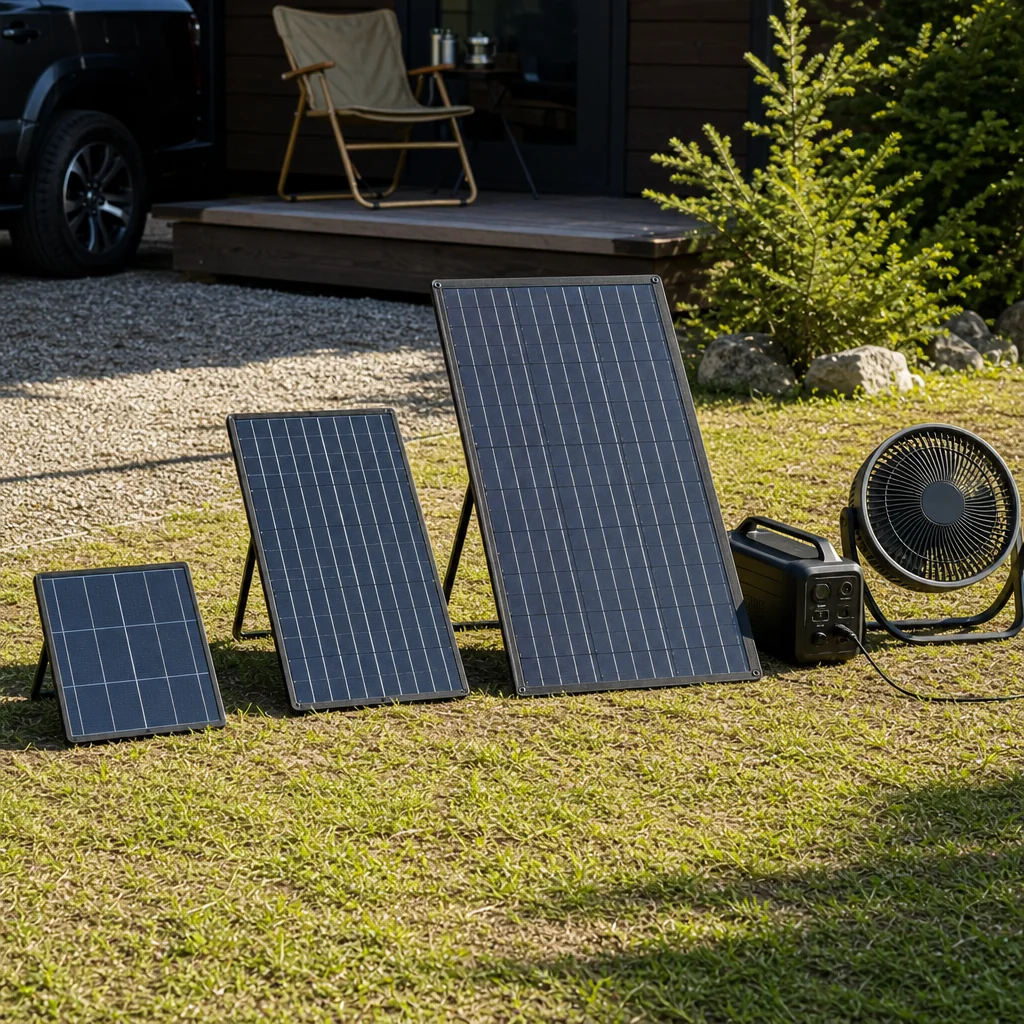
For most rechargeable fans, a 30W to 100W solar panel is the practical range. The right choice depends on daily energy use, sun exposure, and whether you need the fan to keep running after sunset.
For most rechargeable fans, a 30W to 100W range is the practical sweet spot. The right size depends less on the fan alone and more on how many hours you want to run it, whether you need nighttime use, and how much real sun your setup gets.
Is your fan dying right when the afternoon heat still hasn’t let up, or do you want a simple backup for a shed, van, porch, or outage kit? In small off-grid systems, the numbers are usually modest: a low-draw fan can fit comfortably inside the same energy range as basic cabin and RV loads used in real-world solar sizing examples. You’ll leave with a clear way to size the panel, avoid the common undersizing mistake, and choose a setup that actually works after sunset.
Start With the Fan’s Daily Energy Use
The cleanest way to size any small solar setup is to begin with daily energy use in watt-hours, not panel count. That same daily energy use in watt-hours approach shows up across off-grid van, RV, and cabin planning because it keeps you from buying by guesswork.
A rechargeable fan usually falls into one of two camps. Some are small USB or DC fans with an internal battery and a draw of roughly 5W to 15W. Others are larger portable fans that can land closer to 20W to 40W or more. If you run a 10W fan for 8 hours, you need about 80Wh per day. If you run a 25W fan for 8 hours, you need about 200Wh per day. That number matters more than the fan’s marketing label.
This is where many people overcomplicate things. A fan is a steady, predictable load, which makes it easier to size than a coffee maker, microwave, or air conditioner. The real issue is accounting for charging losses, cloudy weather, and the fact that a panel’s nameplate wattage is not what you harvest all day in real conditions.
The Short Answer by Scenario
If you only want to top up a fan for daytime use in decent sun, a 30W to 50W panel is often enough for a small rechargeable fan. If you want more dependable daily charging, especially when the fan runs into the evening, 50W to 100W is a safer range. If the fan is larger, or you want to charge other small devices at the same time, 100W is usually the more comfortable choice.
A useful rule of thumb comes from small-system planning where 1 kW of solar often produces about 4 to 5 kWh per day in good sun. Scaled down, a 100W panel might deliver roughly 400Wh to 500Wh on a strong day before real-world losses. A 50W panel might produce roughly half that. For a fan needing 80Wh to 200Wh per day, that gives you a realistic starting point instead of an ideal lab estimate.
Here is the practical range most people can use:
| Fan use case | Estimated daily use | Practical panel size |
|---|---|---|
| Small USB fan, light use | 40Wh to 80Wh | 20W to 40W |
| Small rechargeable fan, all-day summer use | 80Wh to 150Wh | 40W to 60W |
| Mid-size portable fan | 150Wh to 250Wh | 60W to 100W |
| Fan plus phone/light backup | 200Wh to 350Wh | 100W+ |
These are sensible working sizes, not theoretical minimums. If your weather is mixed, your panel sits flat, or you want reliable evening charging, rounding up is usually the better decision.
Why a Tiny Panel Often Underperforms
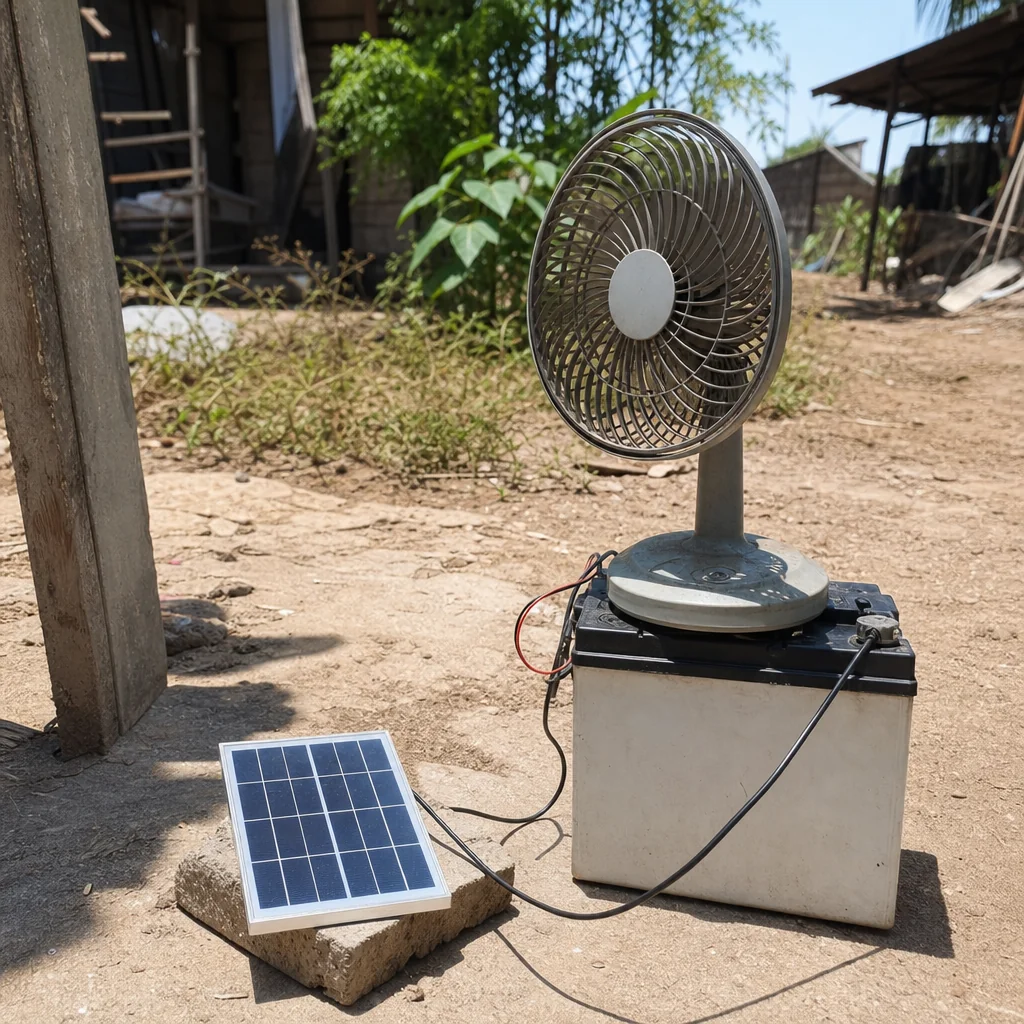
A lot of people look at a 10W or 20W panel and assume it will work because the fan itself seems small. The problem is that solar production depends on sun hours, heat, angle, dust, and charging efficiency, so the gap between “can work” and “works every day” is real.
Say your fan uses 120Wh in a day. A 30W panel might cover that on a great sunny day, but it leaves little room for haze, shade, imperfect orientation, or conversion losses. A 50W panel gives you more breathing room. A 100W panel starts to feel easy rather than fragile, especially if you are also charging the fan’s internal battery for nighttime use.
The same lesson shows up in camper-van electrical planning: match the system to real daily use. For a fan, that usually means modest solar, but not toy solar.
Daytime-Only Use Changes the Answer
If your fan will run only while the sun is out, you may not need much battery storage at all. In that case, you are closer to a direct-use solar setup, where power is used immediately without battery storage. That can reduce cost and simplify the system, but performance drops quickly when clouds roll in and stops entirely after sunset unless the fan has its own battery.
This matters because “rechargeable fan” can describe two different setups. One is a fan with a built-in battery that you charge during the day and run later. The other is a fan you expect to power live from solar. The first setup is more forgiving and usually better for real off-grid comfort. The second is simpler on paper, but less useful in changing weather.
For a greenhouse, workshop, chicken coop, porch, or daytime patio area, battery-free or direct daytime charging can make sense. For sleeping comfort, outages, or hot evenings in a van or cabin, a small battery-backed setup is usually the better choice.
Battery and Controller Choices Matter More Than People Expect
A rechargeable fan system is not just panel wattage. If you are charging a separate battery bank or portable power station, usable battery capacity matters. For reliable overnight use, usable capacity and battery efficiency matter more than headline size alone.
If you are building a custom setup, a good charge controller helps squeeze more energy out of the panel. In small systems above roughly 200W, MPPT is the clear favorite, but even on modest setups the case for MPPT is strong when sunlight is inconsistent. One long-running off-grid hobby system found that MPPT typically recovers about 30% more energy than simpler controllers. For a small fan system, that can be the difference between “almost enough” and “charged before evening.”
If you are using an all-in-one power station, much of this is handled for you. That convenience costs more, but it keeps the setup simple, which is often the right tradeoff for casual off-grid use.
A Simple Way to Size Your Panel
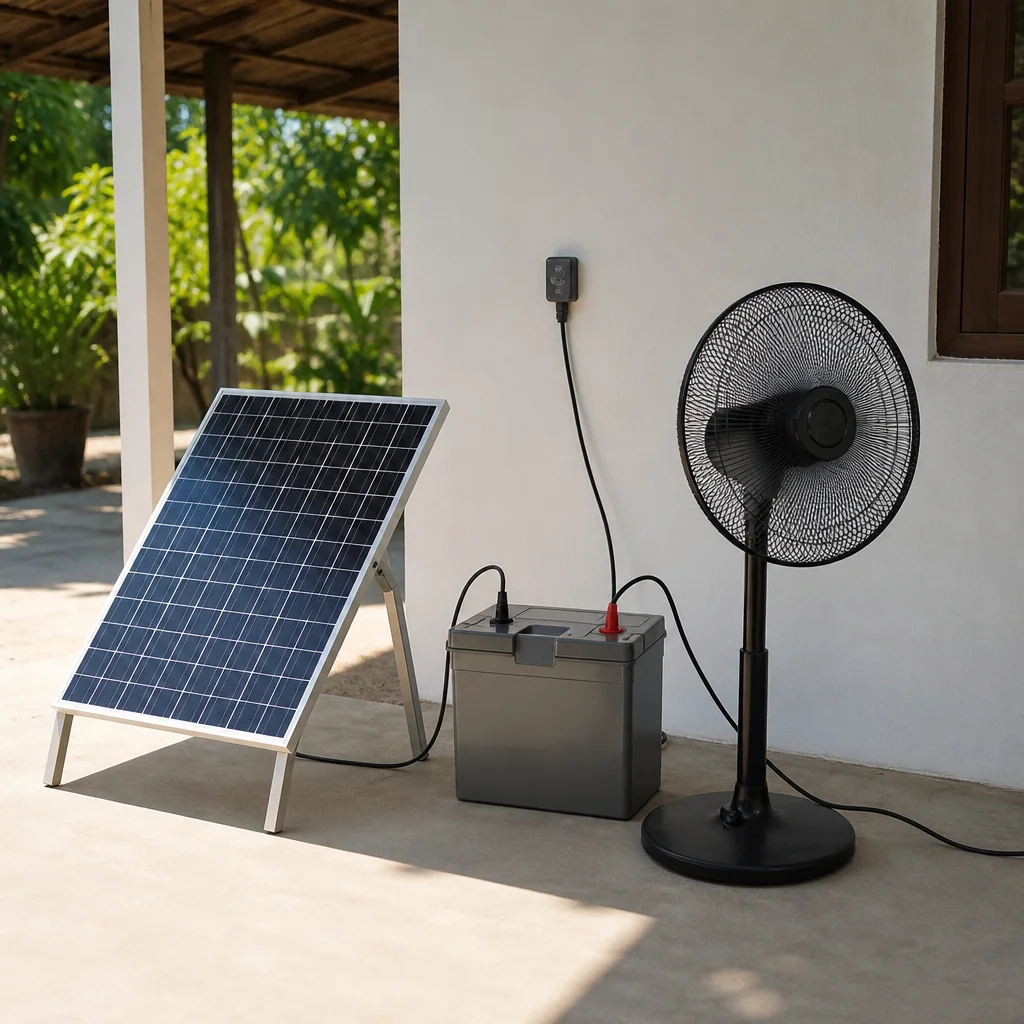
A practical sizing method is to total the fan’s daily watt-hours, then choose a panel that can comfortably replace that energy during your expected sun window. If your fan uses around 80Wh per day, a 30W to 50W panel is a realistic starting point. If it uses 150Wh to 200Wh per day, move into the 60W to 100W range. If you want margin for cloudy afternoons, poor panel angle, or charging a cell phone and light too, lean toward 100W.
For example, a small 12-inch rechargeable fan drawing about 15W for 8 hours needs about 120Wh. In a sunny setup, a 50W panel may cover that. In more variable conditions, a 100W panel is the safer buy because it refills faster and gives you more recovery after a weak-weather day.
That mirrors what small off-grid RV systems show in practice. A no-AC RV can live comfortably around 400W to 600W of solar for roughly 1.9 kWh per day, so a single fan’s needs are tiny by comparison. The takeaway is not that you need a big system. It is that you should buy enough panel to make the system feel dependable instead of constantly borderline.
So What Size Should You Buy?
For most people, 50W is the minimum sensible choice and 100W is the low-stress choice. If your fan is genuinely small and only needs occasional charging, 30W can work. If you expect daily use in hot weather, want to charge through imperfect sun, or hate waiting for batteries to refill, 100W is usually the smarter purchase.
A small fan can run on a small solar setup, but off-grid comfort comes from margin. Size the panel to your real usage, give yourself a little breathing room, and your fan stops being a gadget and starts being reliable summer infrastructure.

Maya Chen
Maya Chen is part of the Farseen editorial team.