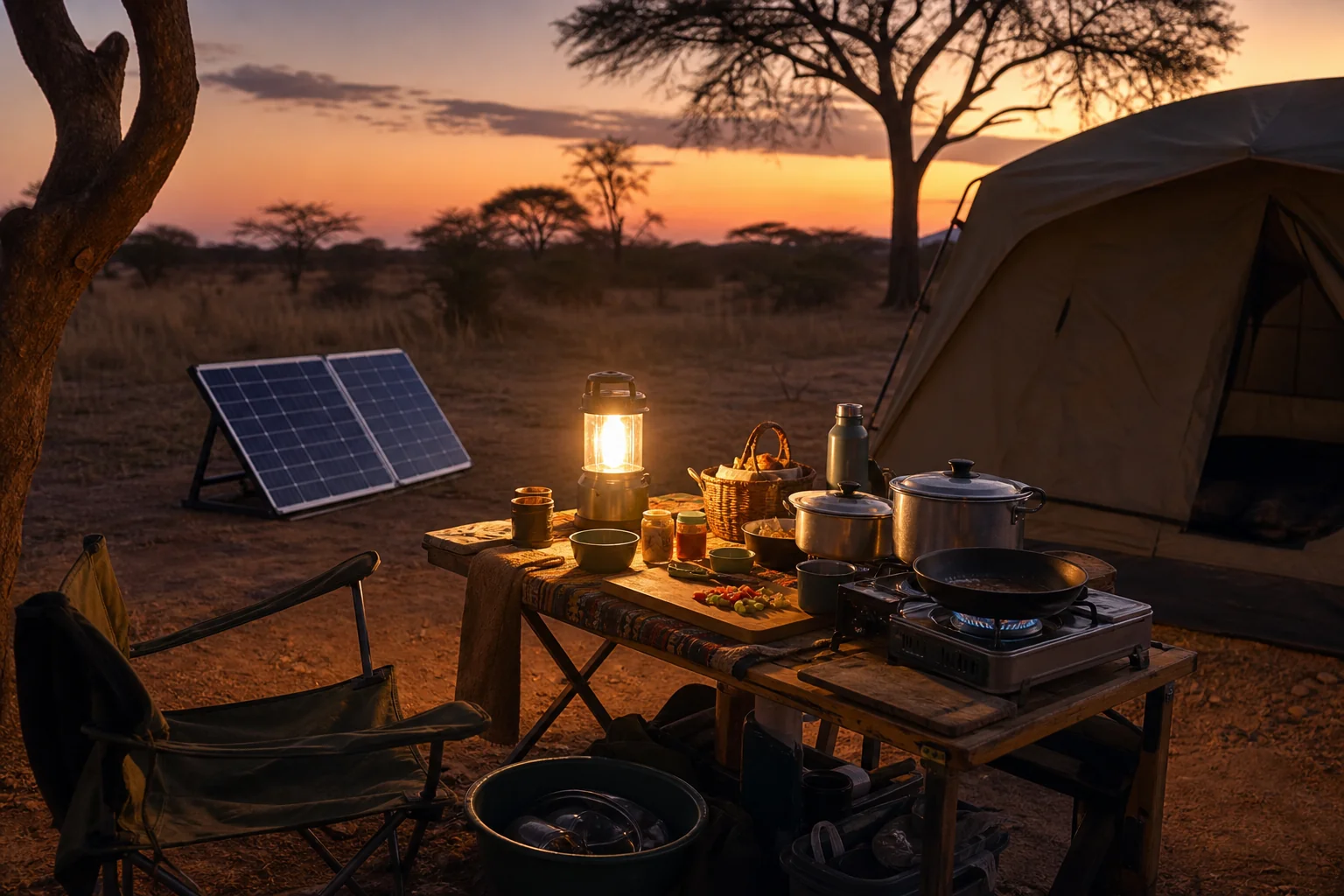
Choose a solar camping light by matching brightness, runtime, charging backup, and durability to where you will use it: soft low-lumen light inside the tent, stronger dimmable area light at the cook table, and USB backup for cloudy trips.
Is dinner prep turning into a one-handed flashlight routine while the tent glows too bright for anyone to sleep? Field notes on portable solar lighting show that advertised solar recharge times can stretch from 10 to 12 hours of direct sun to more than 18 hours in overcast conditions, so the best choice is not the biggest lantern. It is the one that fits your real campsite rhythm. Here is how to pick a solar camping light that keeps your tent calm, your cooking area safe, and your battery plan realistic.
Start With the Job, Not the Brightest Box
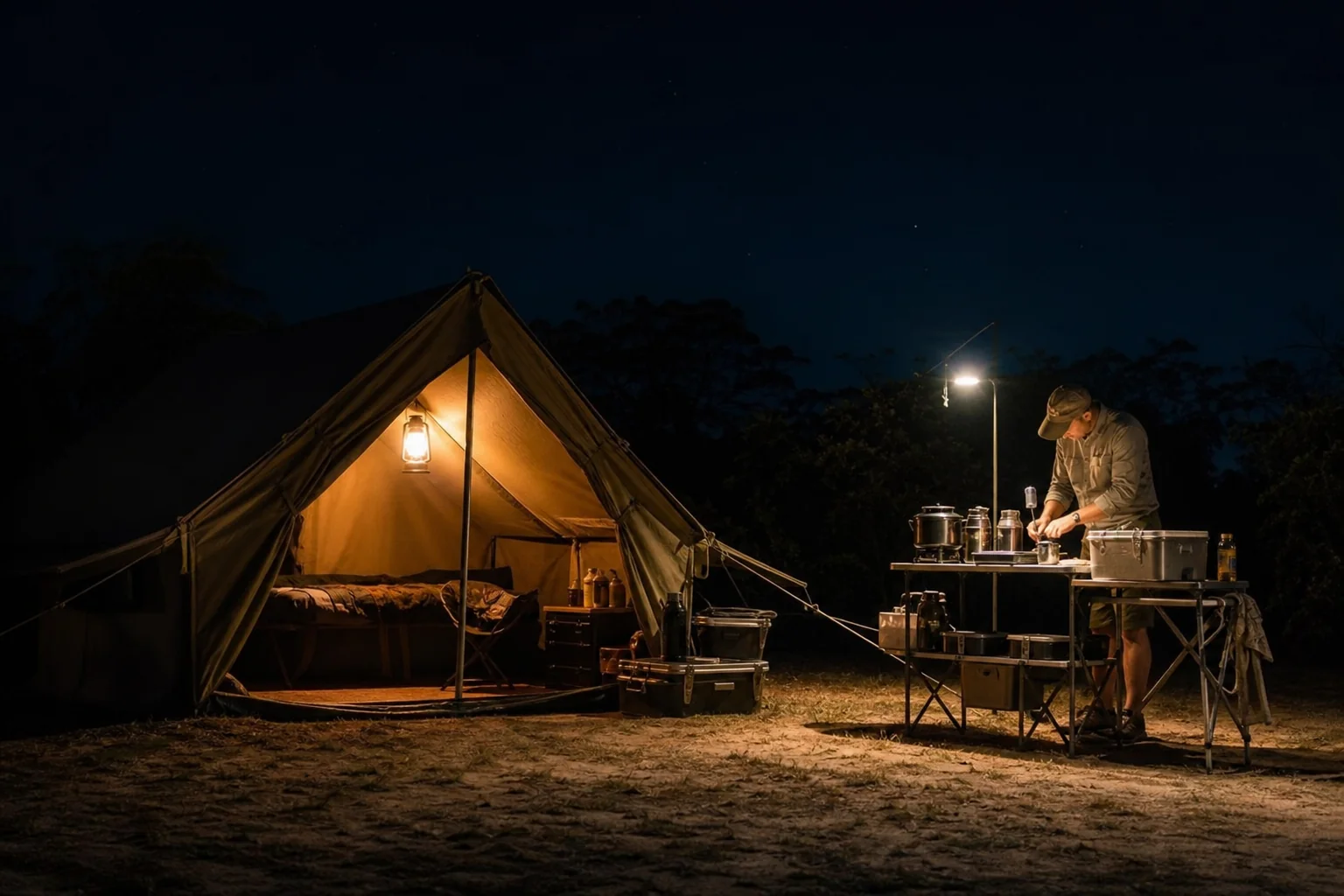
A solar camping light is a rechargeable LED lantern or area light that stores solar energy in a built-in battery, then provides light after sunset. That sounds simple, but tent lighting and cooking lighting are different jobs. Inside a tent, too much brightness feels harsh, wakes people up, and ruins night vision. Around a stove, low light can make it harder to see pot handles, knife work, fuel valves, and raw food.
For tent use, a lower setting is usually more valuable than a headline lumen number. Research notes from portable solar camping light testing define lumens as brightness, with lower lumens suited to tent lighting, reading, and navigation, while higher output helps with cooking and gear sorting. A practical target is a lantern that can dim low enough for bedtime but still reach roughly 200 lumens when you need to dress, check gear, or calm a messy tent after dark.
For outdoor cooking, choose a wider, dimmable lantern rather than a narrow beam. The goal is even light over a picnic table, stove, cooler, and wash station. Camping-light reviewers repeatedly favor broad area illumination for car camping because it reduces setup stress and makes it easier to find gear. Testing also notes that the brightest setting can feel harsh during long use, which is exactly why dimming range matters.
| Campsite task | Useful light behavior | Practical target |
|---|---|---|
| Sleeping tent | Soft, low glare, hangable | Low mode below harsh reading brightness |
| Reading or changing clothes | Gentle local light | Around 35-200 lumens |
| Cooking and dish cleanup | Wide, stable area light | 200-1,000 lumens if dimmable |
| Emergency campsite search | High output, simple controls | Bright mode plus long low-mode runtime |
Runtime Matters More Than Battery Size
Battery capacity is useful, but runtime tells you what the light actually does after sunset. Two lanterns with similar batteries can behave very differently because LED efficiency, brightness modes, and power management control how fast stored energy disappears.
The most important habit is to read runtime by mode. A light that runs several evenings on low may be more dependable than one that burns brightly for only a short window. Portable solar light notes show how non-linear this can be: one example runs 7 hours at 2,400 lumens but 150 hours at 35 lumens, and cutting brightness by half may extend runtime by 150% to 200%. That is the difference between “bright for dinner” and “still usable on night three.”
A simple camp calculation helps. If you cook for 90 minutes, clean up for 30 minutes, and use tent light for another hour, you need roughly three hours of dependable light per night. For a two-night trip, that becomes six hours before any midnight bathroom trips, gear repairs, or storm delays. A good solar camping light for this scenario should comfortably exceed that runtime on medium, not only on its lowest setting.
Small LED loads are exactly where solar makes sense. Portable solar guidance notes that LED lanterns and light strings are well suited to solar because their power draw is low, while high-heat appliances like kettles, hot plates, or space heaters are less appropriate for portable solar panels. In plain terms, use solar lighting to make cooking safer, but do not expect a lantern or small panel to run the cooking itself.
Treat Solar Charging as a Bonus, Not a Guarantee
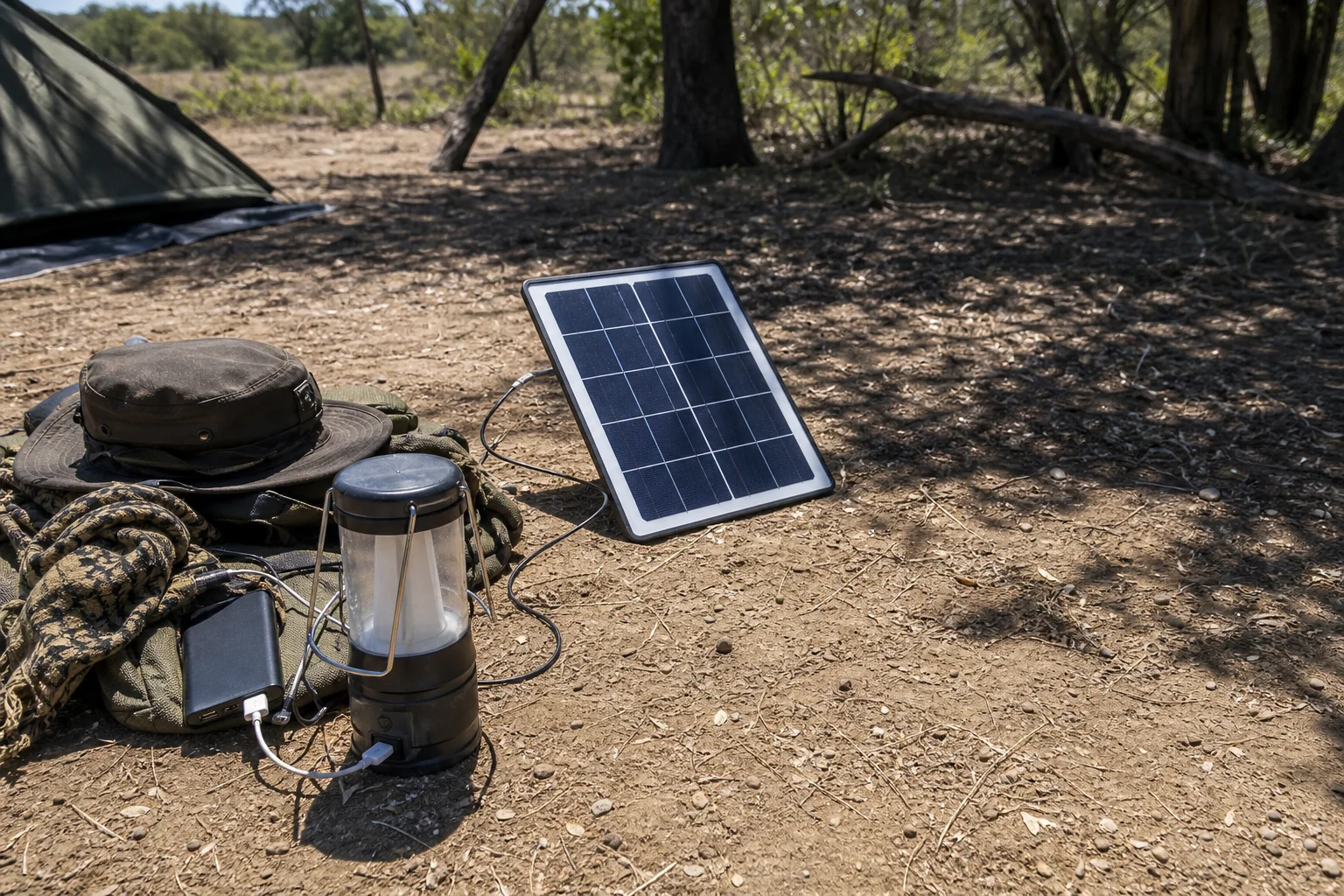
Solar charging is valuable, especially for low-impact camping and emergency kits, but the small panel on a lantern has limits. Trees, haze, clouds, dust, poor angle, and a panel left in shade can all cut output. Lab efficiency does not equal campsite charging.
Portable solar camping notes report that monocrystalline panels may reach 15% to 22% efficiency in lab conditions, while field performance can degrade by 20% to 40%. That same research warns that a 10- to 12-hour direct-sun recharge may need more than 18 hours in overcast conditions. This is why a light with USB backup is a smarter buy for multi-day trips than a solar-only design.
Think of the built-in panel as a daily top-up. Before leaving home, charge the lantern by USB. At camp, place it in direct sun after breakfast, angle it toward the strongest light, move it when shade shifts, and wipe the panel clean. Before dinner, check the charge and switch to medium or low as soon as cooking no longer needs full output.
For longer trips, a small power station or power bank can stabilize your lighting plan. Off-grid solar basics explain that photovoltaic panels feed energy into batteries through regulating equipment, and stored power is what keeps systems useful after sunset or during cloudy weather. The campsite version is simpler: lantern first, USB backup second, and solar panel as the extender.
Choose the Right Form for Tent and Kitchen
Shape matters more than many buyers expect. A tent light should hang from a loop, clip to a ridgeline, or sit without tipping. A cook light should stand securely on a table, hang above the prep area, or mount to a shelter pole without throwing glare into everyone’s eyes.
For backpacking, prioritize low weight, compact size, useful low modes, and a reliable clip or hang point. A collapsible or flat lantern packs better than a bulky cylinder, and a headlamp should still handle walking, latrine trips, and hands-free repairs. Solar charging can help, but backpackers should not carry a heavy lantern just because it has a large battery.
For car camping, RV use, and basecamp cooking, broader light and longer runtime are worth extra size. A lantern that sits in a kitchen box and runs several evenings is often more useful than an ultralight light that needs constant charging. Off-grid equipment planning also favors matching parts as a complete system rather than buying isolated gadgets because reliability depends on how power, heat, water, and comfort systems work together.
Water resistance and control design deserve a hands-on check. Look for simple buttons you can operate in the dark, with cold fingers, or while wearing gloves. A lantern that requires a long sequence of clicks to dim can be annoying at bedtime and unsafe near a stove if you need quick light.
Pick a Light Color You Can Live With
Light temperature affects comfort. Cool white light can make a cooking area feel crisp and clear, but it can feel clinical inside a tent. Warm light is easier on tired eyes and tends to feel calmer during late meals, card games, or reading.
If one lantern must do both jobs, choose a model with dimming and, ideally, multiple color temperatures. Use warmer low light inside the tent and brighter neutral light outside for cooking. If your lantern has only one tone, prioritize a diffuser that softens glare. Frosted diffusers are useful because they spread light across a wider area instead of creating a bright spot and deep shadows.
This is also where solar lights beat gas lanterns for tent use. LEDs are fumes-free, cool-running compared with flame-based lights, and safer in enclosed spaces when used as directed. They also avoid disposable battery waste when recharged well, which is a meaningful eco advantage over a season of weekend trips.
Decide When a Solar Lantern Is Not Enough
A solar camping light should be part of a lighting system, not the whole system. For a simple overnight, one dimmable lantern and a headlamp may be enough. For family camping, storm season, dispersed camping, or medical needs, redundancy matters.
A sensible setup for two adults cooking outside a tent would include one solar lantern for the table, one small hanging tent light, and one headlamp per person. If you already carry a portable power station for phones, camera batteries, or a 12V fridge, choose USB-rechargeable lights so the station can refill them during cloudy stretches. Portable power station notes emphasize matching capacity and output to real loads, with smaller models aimed at phones, lights, laptops, and short trips.
Solar-integrated tents and advanced fabrics are interesting, but they are not yet the default answer for most campers. A 2021 smart solar-powered tent paper describes flexible panels, batteries, lighting, charging ports, and even cooking concepts integrated into a tent system. That shelter-based energy research points toward where tent design could go, but for this buying decision, a dependable lantern with USB backup is usually cheaper, easier to replace, and less risky than tying your core lighting to the tent itself.
A Practical Buying Standard
A good solar camping light for tents and outdoor cooking should have a low, non-glaring tent mode; a brighter dimmable cooking mode; USB charging; a panel that is easy to aim; stable hanging and tabletop options; weather resistance; and clearly stated runtimes by brightness level. If the product page only shouts peak lumens and says little about runtime, charging time, or water resistance, keep looking.
The eco-smart choice is not necessarily the most feature-heavy lantern. It is the light you will actually keep charged, use on low when possible, repair or keep for years, and pair with a backup plan. Solar lighting works best when it supports lower energy habits instead of encouraging oversized gear, which aligns with broader off-grid guidance that smaller, efficient systems are easier to power and maintain. That emphasis on lower energy use is a recurring principle in green building and off-grid design.
FAQ
Can a solar camping light charge fully in one day?
Sometimes, but do not count on it. Full recharge claims usually assume direct sun, clean panels, and ideal angle. In shaded forests or cloudy weather, use solar as a top-up and start with a full USB charge.
How many lumens do I need inside a tent?
For sleeping and basic movement, low light is better than high output. Around 35-200 lumens covers many tent tasks, while higher settings are more useful outside for cooking, sorting gear, or emergency visibility.
Should I buy one big lantern or two smaller lights?
Two smaller lights are usually more flexible. One can stay in the tent while the other handles cooking, and you still have light if one battery runs down. For car camping, one stronger kitchen lantern plus a smaller tent light is the most practical pairing.
Choose the light that fits your nights, not the brightest spec on the shelf. For most campers, the sweet spot is a dimmable solar LED lantern with honest runtime ratings, USB backup, weather resistance, and enough warm low light to make the tent feel calm after the stove is packed away.

Jordan Lee
Jordan Lee is part of the Farseen editorial team.