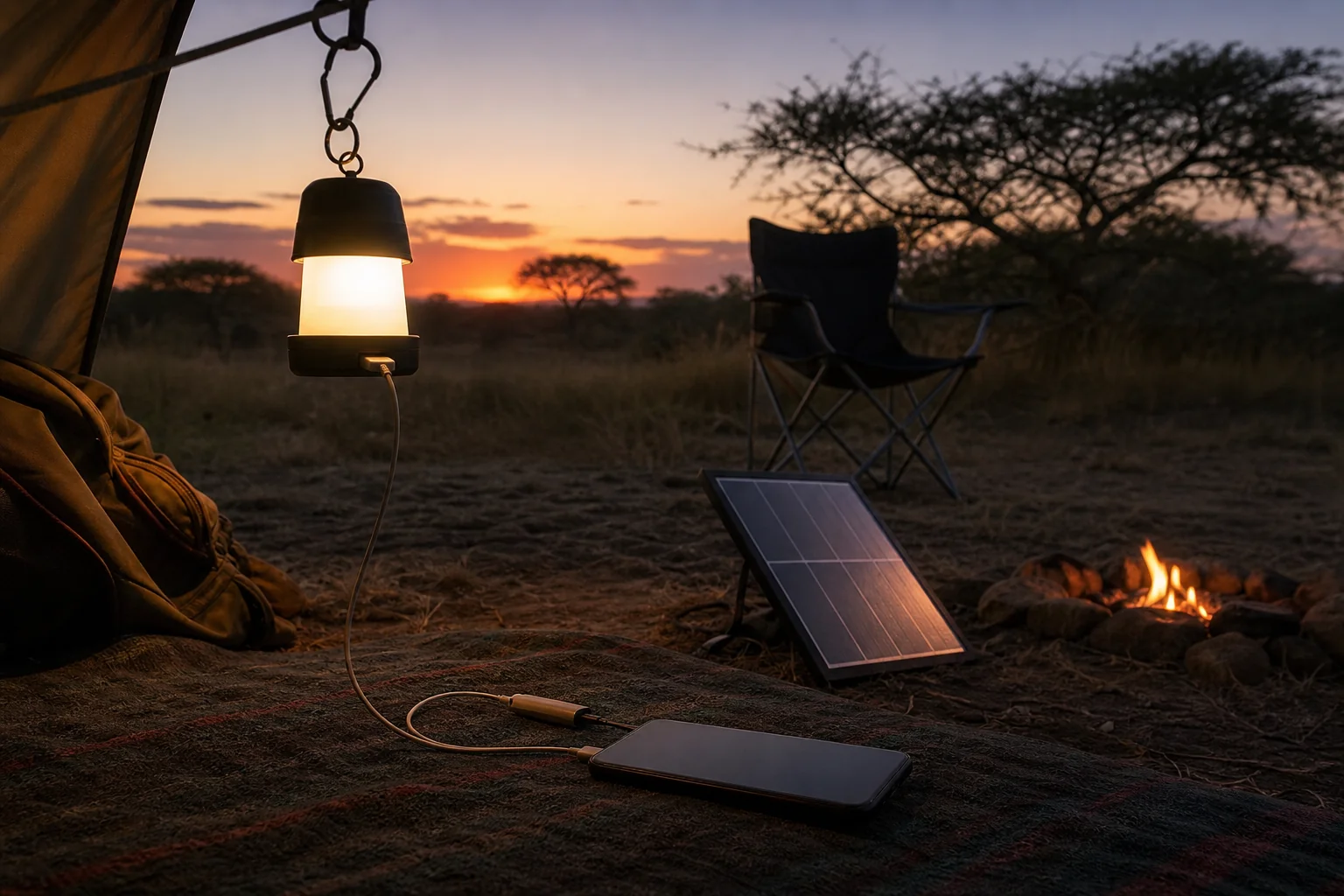
Solar tent lights with phone charging are useful for short camping trips, emergency kits, and low-power backup needs, but they are not a replacement for a real solar panel and power bank setup when your phone is mission-critical.
Is your tent bright enough at dinner while your phone is still limping along at 12% by bedtime? In camp use, the best value comes when the light’s battery is treated as a shared safety reserve, not a fast charger. Here’s how to decide when the combo makes sense, which specs matter, and when to buy separate gear instead.
What Solar Tent Lights With Phone Charging Actually Do
A solar tent light with phone charging combines three small systems: an LED lamp, a rechargeable battery, and a small solar panel. Some models build the panel into the light body, while more camp-friendly versions use a separate or fold-out panel so you can leave the panel in the sun while keeping the light inside the tent.
The basic solar process is simple: photovoltaic cells convert sunlight into DC electricity, and a battery stores that energy for later use. Off-grid systems use the same logic at larger scale, with panels, batteries, charge controllers, and sometimes inverters forming the core of an off-grid solar system. In a tent light, everything is miniaturized, which is convenient but also limits charging speed.
The key tradeoff is surface area. A palm-sized solar panel can run an LED light efficiently, but it usually cannot refill a modern smartphone quickly. That is why many solar power banks and solar lanterns should be viewed as emergency top-up tools rather than primary phone chargers.
When They Are Worth It
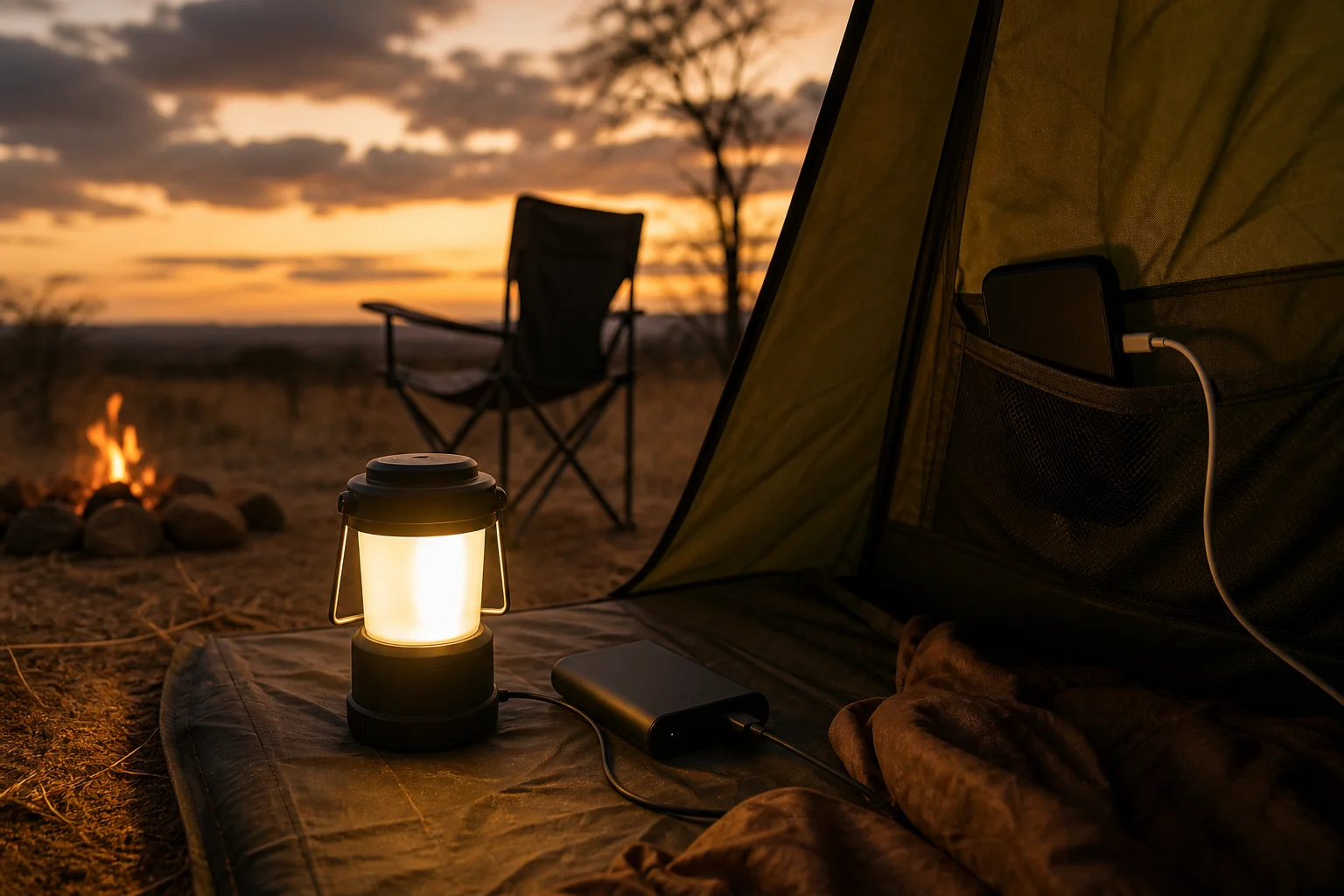
For Weekend Camping With Modest Phone Use
These lights make sense when your phone use is light: checking the weather, taking a few photos, using offline maps briefly, and keeping enough battery for a call. In tested solar phone chargers, phone charging commonly took about two to four hours depending on charger type, sunlight, battery size, and device. A tent light with a smaller panel will usually be slower than the stronger dedicated chargers in that kind of test.
A practical example helps. If your phone needs one partial refill during a two-night trip, a lantern with a 4,000 mAh battery may be useful, especially if you keep the light on low and charge the phone only after dark. If you expect to stream music, use GPS all day, or share power with another camper, the same lantern becomes undersized fast.
For Emergency Light Plus Communication Backup
A combo light is strongest as emergency gear. It gives you area light, a small stored battery, and a way to harvest some energy if the outage or trip runs longer than planned. The portable solar panel market is being shaped by camping, hiking, emergency backup power, and remote work needs, which reflects how buyers use these devices beyond simple recreation.
For a storm kit, the value is not that the light will fully charge every phone in the house. The value is that it can keep a phone from dying while also replacing disposable batteries for basic lighting. In gear checks, this kind of device belongs near the tent door or emergency bin, where it is easy to find in the dark and easy to move into the sun the next morning.
For Eco-Friendly Campsites With Low Noise and Low Waste
Solar tent lights are quiet, reusable, and cleaner than burning fuel for light or going through disposable batteries. They fit the same low-load mindset that makes small off-grid systems practical: reduce demand first, then size the solar gear around what you truly need.
For tent camping, that means using low brightness for reading, saving high mode for cooking or setup, and avoiding phone charging until you know how much battery the lamp has left.
When They Are Not Worth It
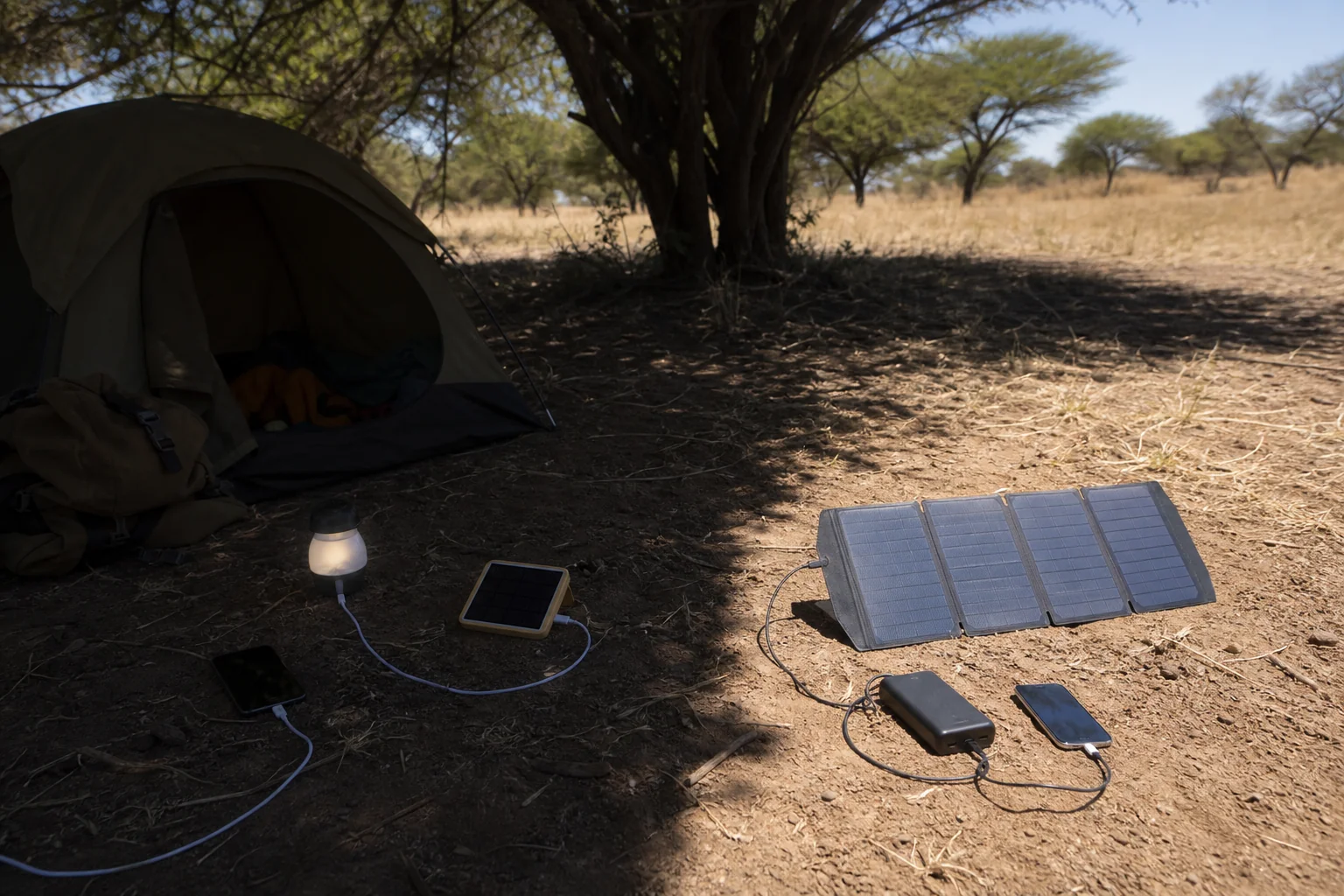
When You Need Reliable Daily Phone Charging
If your phone is your navigation tool, camera, payment method, weather radio, and emergency communicator, do not rely on a solar tent light as your main charger. A dedicated foldable solar panel plus a separate power bank is more dependable because the panel has more surface area and the battery can sit in the shade until you need it.
Small solar lights can take several hours of strong sun to recharge, and even ordinary solar lights often need four to ten hours of direct sunlight for best results. A cloudy afternoon, shaded campsite, dirty panel, or poor angle can turn that plan into a trickle.
When You Camp Under Trees, in Canyons, or in Winter
Solar gear needs open sky. A panel clipped to a tent in a shaded forest may look useful but collect little energy. Winter also shortens the charging window, and a low sun angle makes placement more demanding.
The simple field rule is this: if you cannot put the panel in direct sun from late morning through afternoon, treat the solar feature as a bonus. Charge the lamp at home before leaving, and bring a wall-charged power bank for the phone.
When the Product Has a Tiny Panel and Big Claims
Be skeptical of compact lanterns that promise both long lighting runtime and fast phone charging from a small built-in panel. The math is tight. Phones often need around 5 to 10 watts for basic charging, while larger devices need much more. Wattage, battery size, and sunlight conditions drive real charging time.
A small built-in panel may be fine for maintaining the lantern battery over several sunny days. It is rarely enough to refill a phone quickly after heavy use.
The Specs That Matter Most
| Spec | What to Look For | Why It Matters |
|---|---|---|
| Battery capacity | At least 2,000 to 4,000 mAh for light-duty use | More stored energy means longer light runtime and more phone backup |
| Solar panel size | Larger or detachable panel preferred | More surface area usually means better real-world charging |
| USB output | USB-C preferred, USB-A acceptable | Matches modern phones and cables |
| Brightness | Roughly 50 to 150 lumens for tent and camp chores | Enough light without wasting battery |
| Water resistance | Splash resistance at minimum | Camp gear gets damp, dusty, and dropped |
| Charge indicator | Clear battery level display | Prevents draining the lamp before night |
Capacity deserves extra attention. A 10,000 mAh power bank does not deliver every rated milliamp-hour to your phone because energy is lost during voltage conversion and heat. The same principle applies to lantern batteries, so a 2,000 mAh lamp battery should not be treated as a full 2,000 mAh phone refill.
A Simple Buying Decision
Buy One if Your Need Is Light First, Phone Second
Choose a solar tent light with phone charging if your main need is reliable camp lighting and your phone only needs occasional top-ups. This is the right fit for car camping, backyard emergency prep, kids’ tents, picnic shelters, and short off-grid weekends.
A good example is a two-night summer campsite where you use the lantern on low for reading, hang the panel in direct sun during the day, and add 15% to 30% to your phone at night. That is a realistic use case.
Skip It if Your Need Is Phone First, Light Second
If you need one or more full phone charges, buy a separate power bank and a dedicated solar panel. A small portable power setup follows the same sizing habit used in larger off-grid systems: calculate device demand first, then choose panels and storage around that load.
For phones, a 10,000 to 20,000 mAh power bank plus a 20- to 30-watt folding panel is a more dependable baseline than a lantern alone.
How to Use One Without Wasting Power
Charge the light fully at home before every trip. Once at camp, place the solar panel in direct sun, angle it toward the sun, and move it a few times during the day if you are around camp. Keep the phone in the shade and charge from the lantern or power bank after solar collection, not while the phone bakes in sunlight.
Use the lowest brightness that works. LEDs are efficient, but high mode drains any small battery quickly. If the lamp has separate warm and cool modes, warm low light is usually easier inside a tent and less harsh around camp.
Keep the panel clean. Dust, pollen, fingerprints, and condensation all reduce collection. A quick wipe with a soft cloth before setting the panel out is one of the easiest performance improvements.
Pros and Cons
| Pros | Cons |
|---|---|
| Combines light and backup charging in one compact item | Slow phone charging compared with wall or car power |
| Reduces disposable battery waste | Small panels struggle in shade and cloudy weather |
| Useful for outages, camping, and emergency kits | Battery must be shared between light and phone |
| Quiet and fuel-free | Marketing claims can overstate real solar performance |
| Simple for beginners | Separate panel and power bank work better for high demand |
FAQ
Can a solar tent light fully charge a phone?
Sometimes, but it depends on the lantern battery size, phone battery size, sunlight, and how much power you also need for lighting. For most campers, it is more realistic to expect a useful top-up than a guaranteed full charge.
Should I charge my phone directly from the solar panel?
If the light has a stable USB output and the maker supports direct charging, it can work. In practice, charging the lantern or a power bank first is usually better because phones prefer steady power, while sunlight changes constantly.
Is a solar tent light enough for emergency preparedness?
It is a good part of an emergency kit, not the whole kit. Pair it with a wall-charged power bank, spare cables, and a larger solar panel if you need multi-day phone reliability.
Bottom Line
Solar tent lights with phone charging are worth it when they are bought as efficient lighting with emergency phone backup. If your phone has to stay reliably powered for navigation, work, medical needs, or multi-day travel, use a dedicated power bank and a larger solar panel, then let the tent light do what it does best: keep camp visible without noise, fuel, or disposable batteries.

Jordan Lee
Jordan Lee is part of the Farseen editorial team.