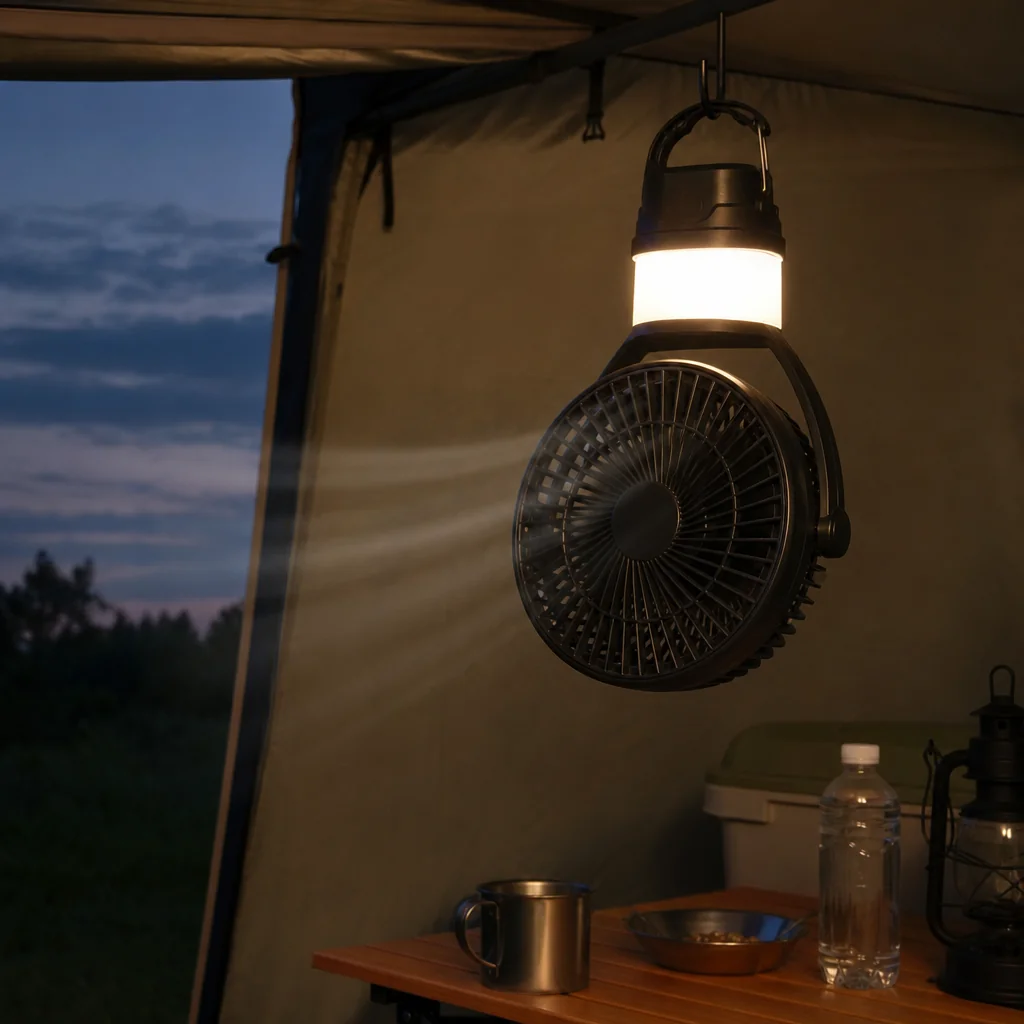
A solar fan with a built-in light can be a practical off-grid tool for personal comfort and backup lighting. It becomes a gimmick when marketing overstates how much space it can cool or how long it can run.
Is your bedroom turning stuffy right when the power goes out, or does your shed stay hot after sundown when you still need both airflow and light? In small off-grid spaces, one well-matched solar load can do two jobs without adding another cord, outlet, or battery to manage. The key is knowing when this combo is a smart buy, when it is underpowered, and how to size it for real life.
What This Product Actually Does
A solar fan uses photovoltaic panels to run a fan motor, sometimes directly in daylight and sometimes through a battery that stores power for later. When a light bulb is added, the product becomes a small multipurpose appliance: part ventilation tool, part emergency light, and sometimes part cell phone charging station.
That distinction matters. In cabins, porches, workshops, tents, and outage kits, combining a fan and light can be genuinely handy because both functions are often needed at the same time. The convenience is real only if the unit stores enough energy to run after sunset; if it works only in direct sun, the light adds far less value than the box suggests.
When It Is Actually Useful
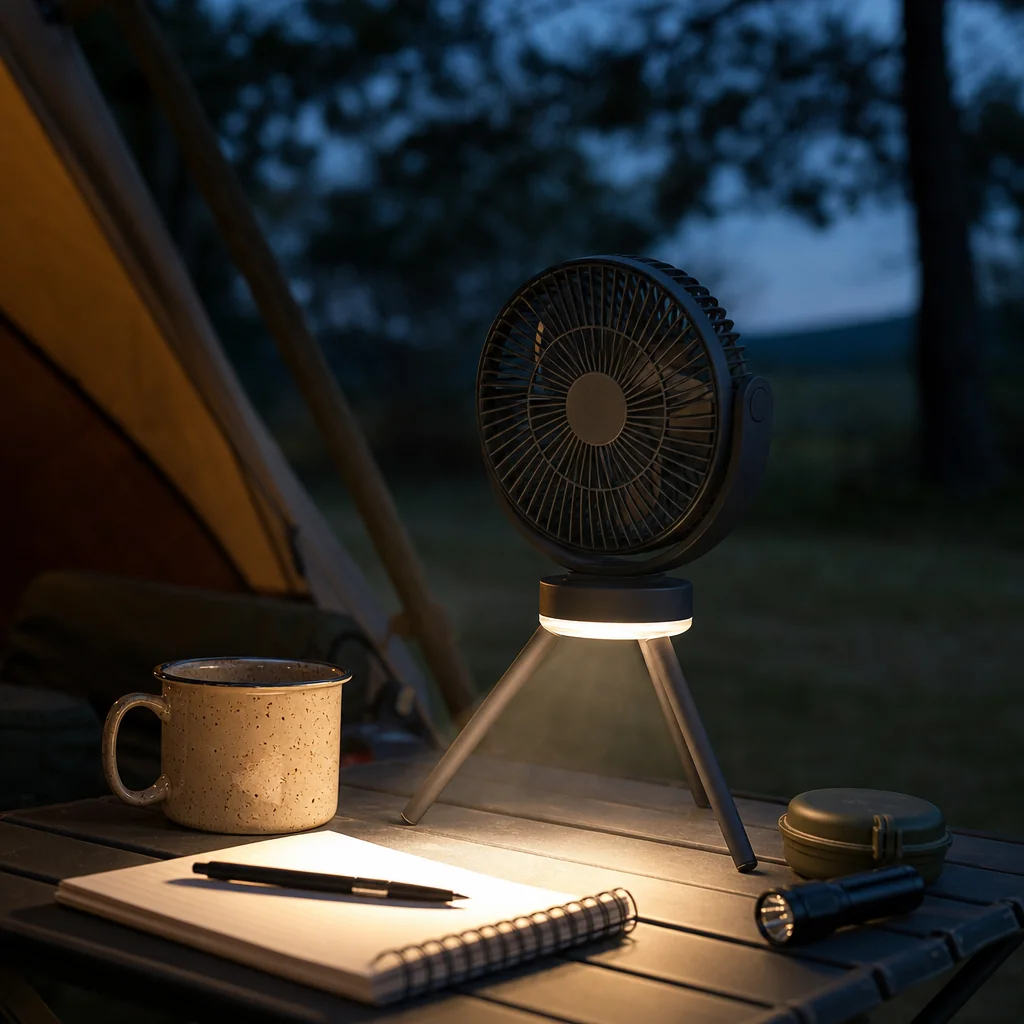
Personal comfort in small spaces
For localized cooling, solar fans make sense because portable and ventilation-focused models work best in a limited area. Add a light, and the same device becomes more practical in a bunkhouse, chicken coop, backyard office, or storm-prep tote because it solves two low-power problems with one charging routine.
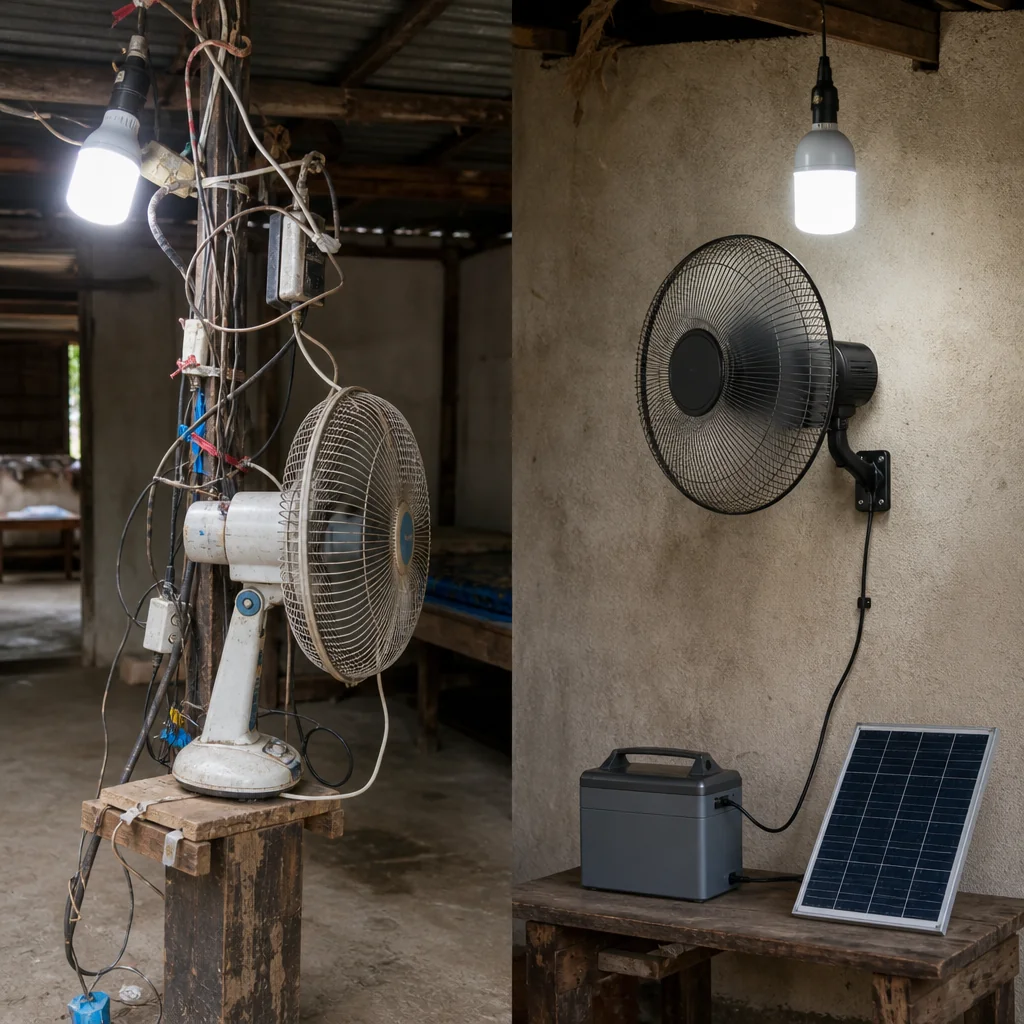
That follows the way off-grid systems are usually built. In remote households, solar home systems are often the first priority because they deliver reliable value from limited solar power. A fan-light combo fits that same logic, which is why it can be genuinely useful for hot evenings in a small sleeping area or while working in a shed.
Emergency backup and outage resilience
A combined unit also earns its keep when grid power is unreliable. In off-grid communities, decentralized solar systems improve safety, evening activity, and communication, even when the available power is modest. For a US homeowner, the lesson is simple: when you cannot rely on wall power, a small device that provides both air movement and light is more valuable than a single-purpose gadget.
The light is not just a bonus. In practical use, airflow helps you stay comfortable enough to sleep or keep working, while the lamp lets you move around safely, find gear, read, or handle a minor repair. That is especially useful in a barn, detached garage, hunting cabin, camper, or kids’ room during a summer outage.
When It Starts Looking Like a Gimmick
When the marketing implies whole-room cooling
The biggest red flag is scale. A combo fan-light can be excellent for one person and still be a poor choice for cooling a full bedroom or living room. Real off-grid design starts with load sizing, and undersizing batteries, solar input, or inverter capacity leads to disappointment fast. If the panel is tiny and the battery specs are vague or missing, the product is probably being sold on the idea of solar rather than on meaningful runtime.
The same issue shows up in basic cabin systems. Experienced users repeatedly recommend keeping loads realistic and demand low. That advice applies here too. If you mainly need reliable light, a dedicated 12V LED setup may be better. If you mainly need strong airflow, a proper DC fan with a separate battery will often outperform a combo unit.
When there is no battery or the battery is too small
A light bulb sounds useful until you remember when you most need it: after sunset. That is why direct-solar-only fan units are often disappointing. Without storage, you may get good daytime airflow but very little nighttime value from the light. For most buyers, the right question is not “Does it have a solar panel?” but “How many watt-hours of storage does it have, and what is the runtime at low and medium speed?”
This is where weak design shows up fast. A compact fan motor plus LED lamp does not need a huge battery, but it does need honest specs. If the seller hides battery capacity, avoids runtime claims, or talks only about “eco-friendly charging,” assume the feature mix is doing more work than the hardware.
A Simple Way to Judge One Before You Buy
A solar setup should be sized by matching watt-hours to actual use, and that principle works even for a small fan-light combo. If a fan draws 10W on low and the LED bulb draws 3W, the combined load is about 13W. A 60Wh battery would, in ideal conditions, run them for a little over 4.5 hours. In real use, expect less because speed changes, battery losses, and imperfect charging all reduce runtime.
That quick math tells you more than most product pages do. If you want evening use from 8:00 PM to 12:00 AM, you need enough storage for that target, not just a fold-out panel clipped to the back. If you want overnight use, you are no longer shopping for a novelty gadget; you are shopping for a serious small-appliance power system.
| Need | Likely Verdict |
|---|---|
| Desk, cot, tent, shed bench, emergency kit | Useful |
| Full-bedroom cooling for two people all night | Usually gimmicky |
| Daytime greenhouse, porch, chicken coop, workshop spot cooling | Useful |
| Replacement for a floor fan or window air conditioner | Gimmicky |
| Backup light plus breeze during outages | Useful if it has a battery |
Definitions That Help You Shop Smarter
Battery storage is the deciding feature. A direct-solar fan runs only when sunlight is actively hitting the panel, while a battery-backed unit stores daytime energy for evening use. In real homes, the second type is almost always more practical because comfort and lighting needs do not stop at sunset.
Ventilation and cooling are not the same thing. A ventilation fan moves stale or hot air out of a space, while a personal cooling fan blows air across your body. That is why solar attic and ventilation fans can help reduce heat buildup, but they should not be confused with whole-room comfort systems.
The Practical Pros and Cons
The strongest case for a fan with a light bulb is efficiency of purpose. In modest solar systems, basic needs like lighting, charging, and small-appliance use compete for limited power. One compact unit can reduce clutter, simplify charging, and give you a more useful outage tool than a standalone lantern or fan.
The downsides are just as real. Performance is limited, storage is often the weak point, and a combo design can force compromise. The best light position is not always the best fan position, and the best airflow angle is not always the safest lighting angle. If one component fails, you may lose both functions at once. If the panel is too small, you end up managing a product that never fully catches up.
Who Should Buy One and Who Should Skip It
A solar fan with a light bulb is worth considering for renters, campers, van travelers, cabin owners, preppers, and anyone with a shed, porch, coop, or detached workspace where wiring is inconvenient. It also makes sense as a secondary comfort tool in a larger off-grid home, where every small DC load handled efficiently helps preserve battery capacity for more important gear.
You should skip it if your real need is strong overnight bedroom cooling, reliable all-weather operation, or daily whole-room comfort. In that case, a better answer is a properly sized DC fan, a dedicated LED light, or a larger off-grid system sized around real loads instead of impulse-buy convenience.
A solar fan with a light bulb is not magic, but it is not nonsense either. Treat it as a small, honest off-grid tool for personal airflow and backup light, and it can be surprisingly useful. Treat it like a miniature air-conditioning system, and it will disappoint you quickly.

Ethan Parker
Ethan Parker is part of the Farseen editorial team.